Rolling Project Reveal - Living Room and Informal Dining Room

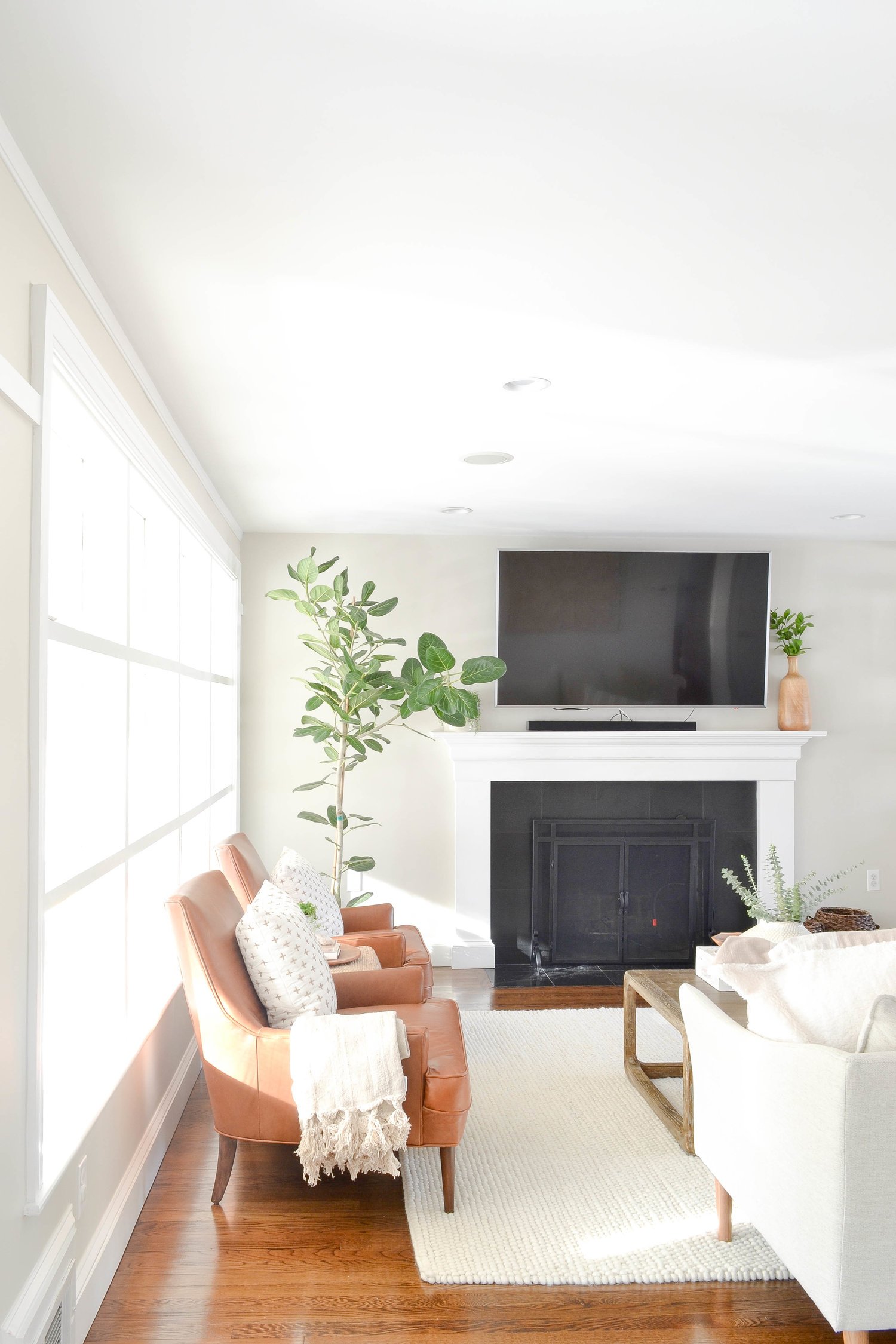
Today we are revealing the second half of our Rolling Project - the Living Room and Informal Dining Area. We have a lot to share about living room layouts, asymmetrical built-ins and oval tables. These conversations are all about function and we love diving deeper on our function choices because they can apply to any style. Whether you’re into a boho vibe and your house is dripping with rattan and ferns, or you’re into a new traditional vibe and your house is dripping with jewel tones and bird patterns, these function ideas are for you.
This living room was a standard version of what we’re seeing in more and more new builds - Fireplace flanked by two mini windows that start 2/3 of the way up the wall. Check. Open concept living room and kitchen. In this case, there was a very large cased opening. Check. Big enough to require multiple areas of function. Check.

So let’s address each element.

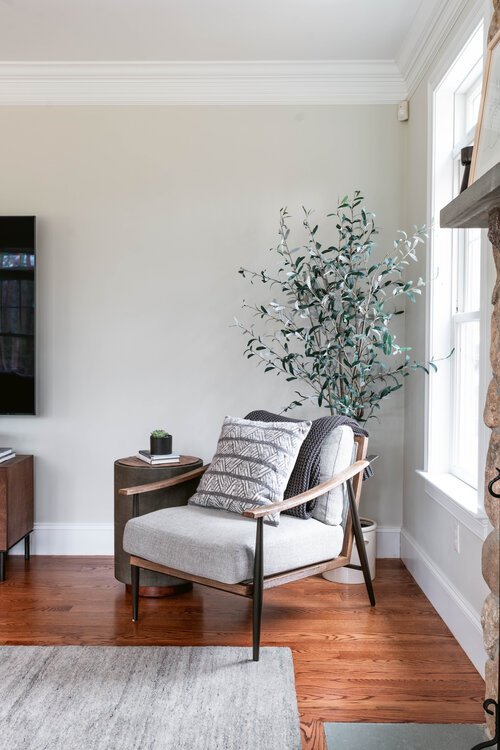
First, the fireplace set up. We see it All. The. Time. It’s a head scratcher for us. When mini windows flank a fireplace, 2/3 of the way up the wall, it’s calling for a built-in. You can add furniture in lieu of a built-in, of course, but the architecture calls for something on both sides of fireplace. Something to ground the mini windows, so they are not floating by their lonesome at an odd height. And something short enough to not block the windows. Benches or cabinetry (sideboard height).
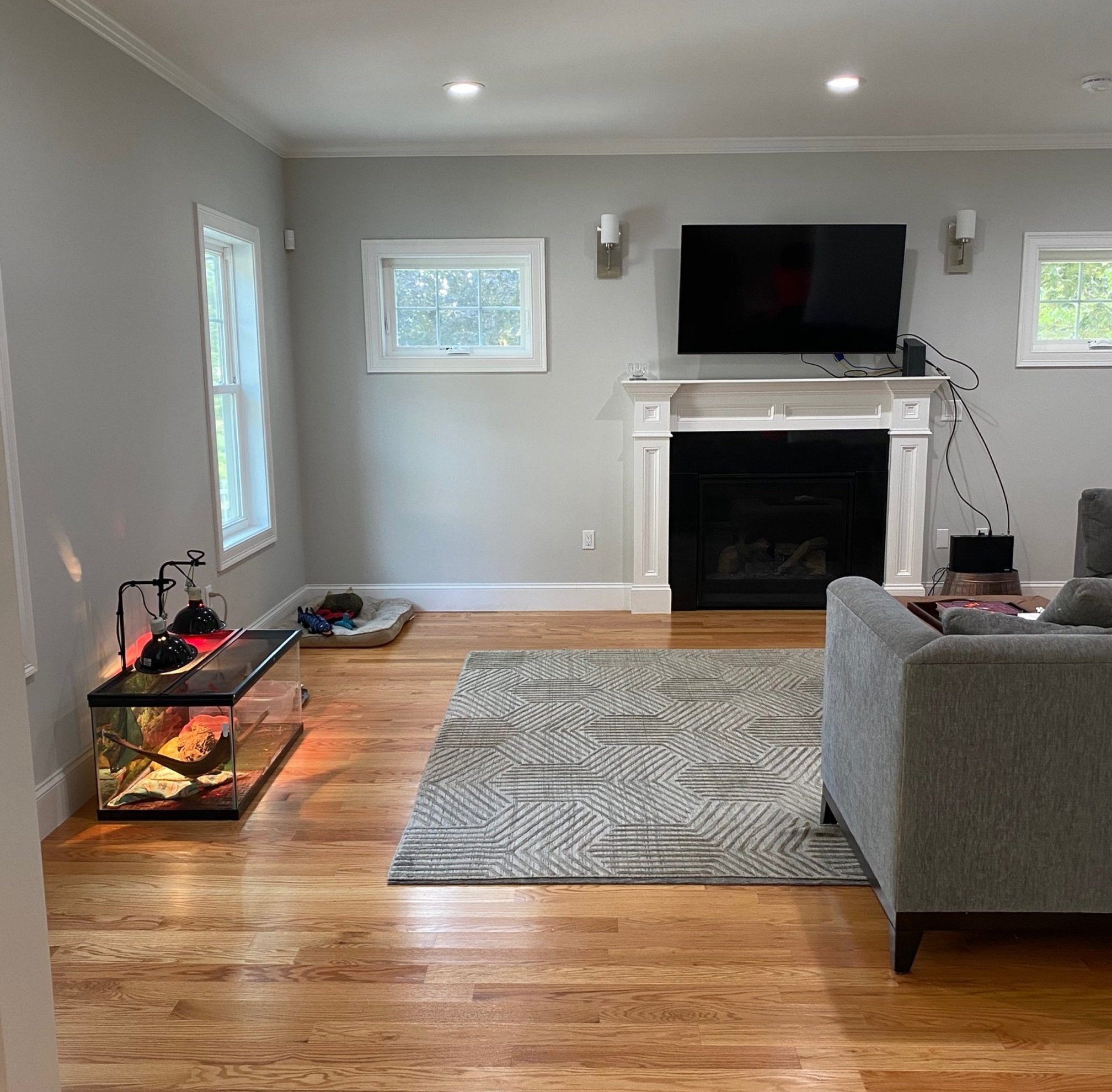


This mini window trend is not cool, in our humble, but straight forward opinion. It forces a design without executing on that design. Either give the homeowner some creative liberties or finish the job! But, enough whining, it has to be dealt with. And, actually, all homes have immovable elements that must be dealt with…or, ideally, worked with.

This particular room had a slightly bigger challenge. The fireplace is flush to the wall. This meant that built-ins were not a natural solution because they would pop out on either side of the fireplace. We don’t love the look of a recessed fireplace. And, don’t get us started on the builder’s placement of those sconces. Madness.

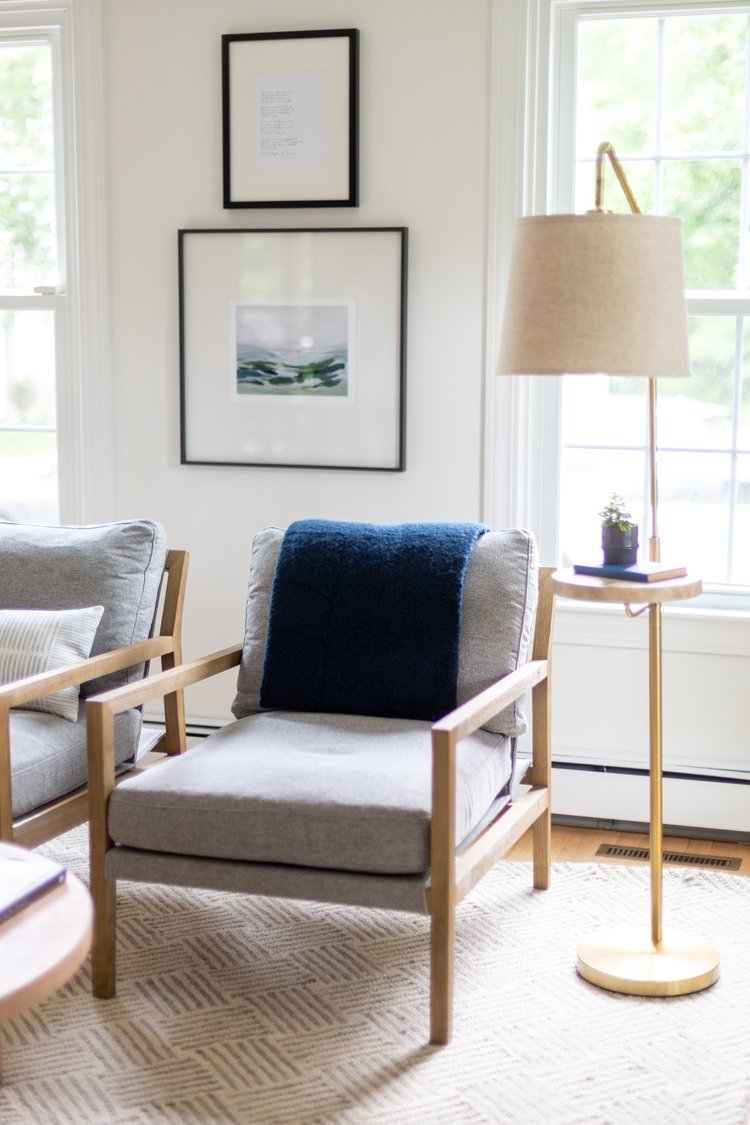
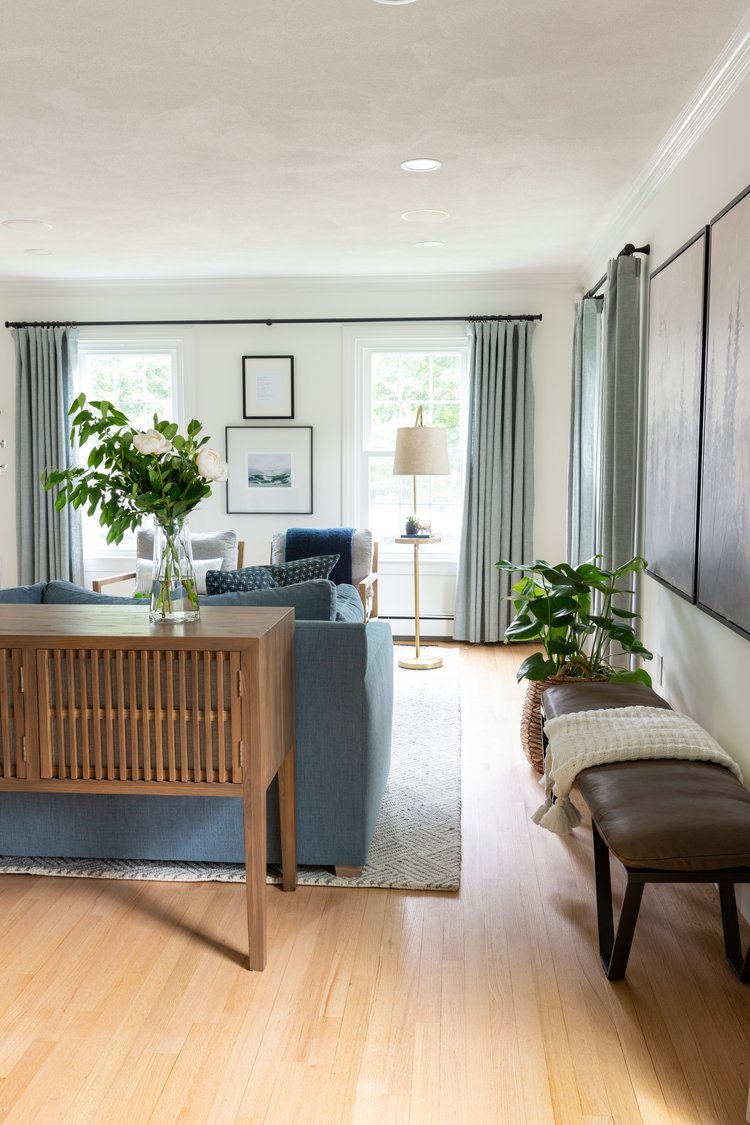
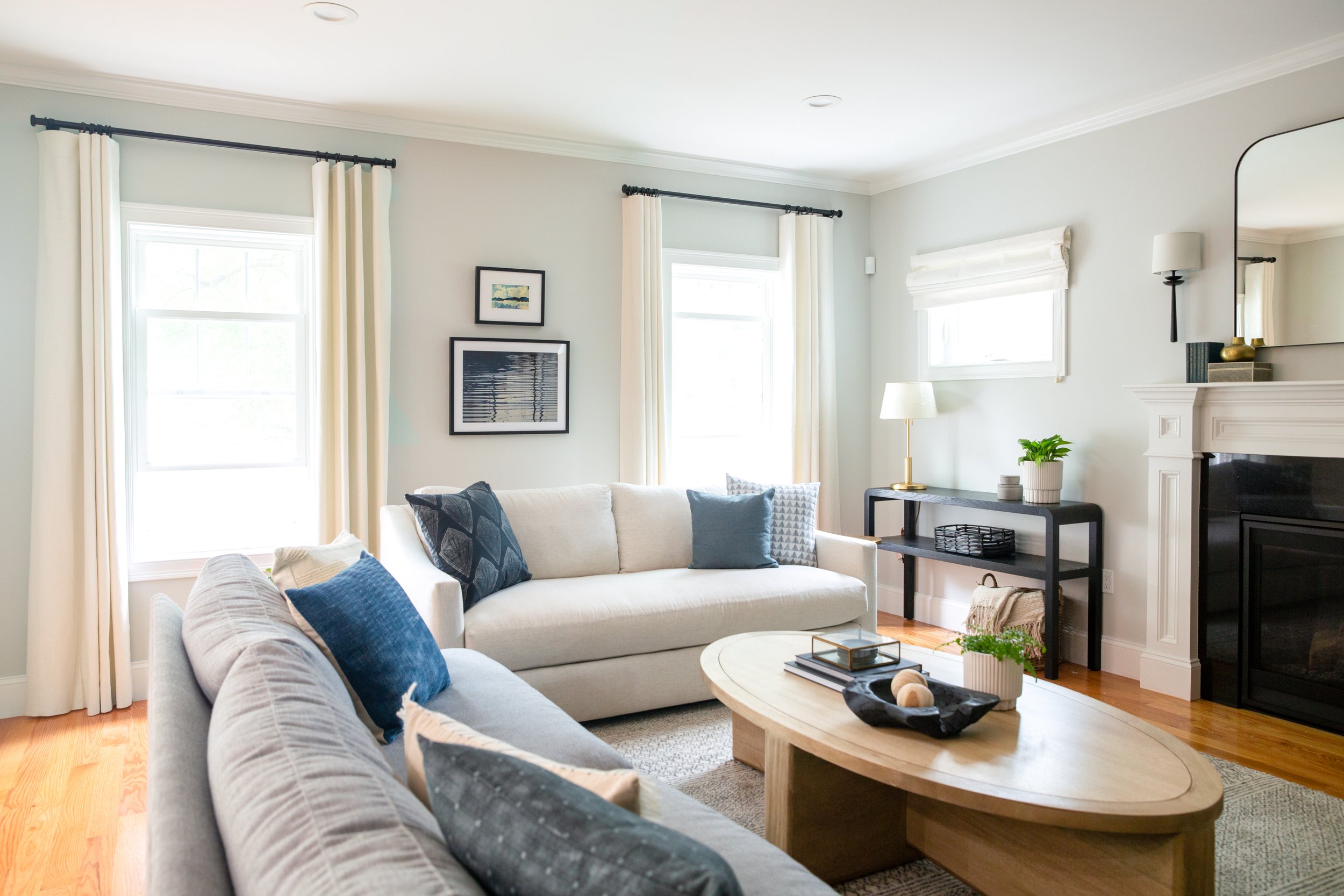
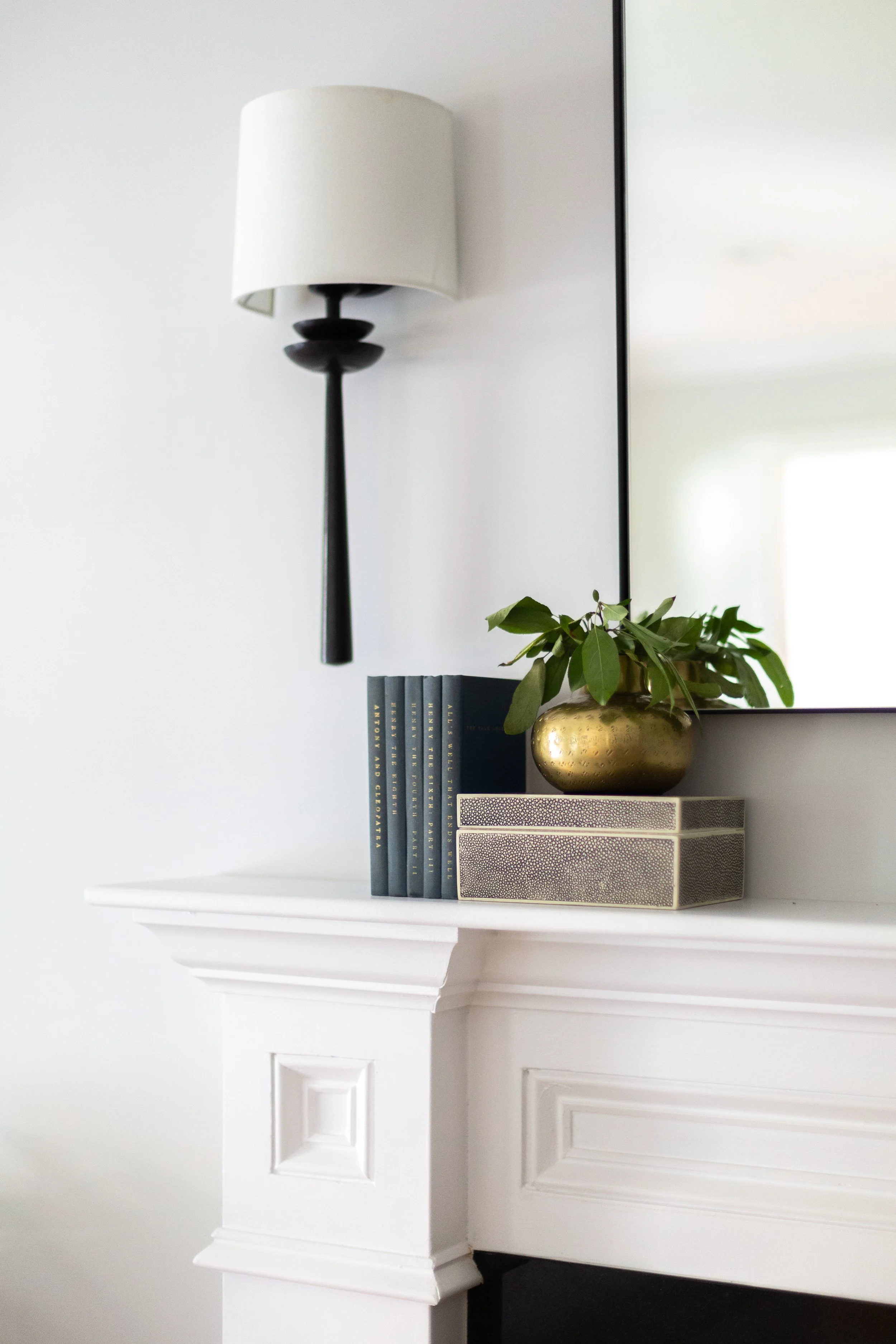
Below is what we came up with: a furniture and decor solution to ground the mini windows, roman shades on the windows so that they didn’t feel so lonely up there on the wall and an asymmetrical built-in on the perpendicular wall that made it feel purposeful (more in a moment).


console table / similar table lamp / similar arched mirror / sconces

Before we move on, a couple details of the fireplace wall transformation.
When it comes to an open concept living room/kitchen, the design advice that is most important is to treat the rooms like cousins, not siblings. Friends, not frenemies. The rooms should strongly relate without feeling identical and without competing. You can repeat colors or shapes or patterns, but maybe not all three. It’s important to design the spaces together (as one large space), but give each room it’s unique personality.

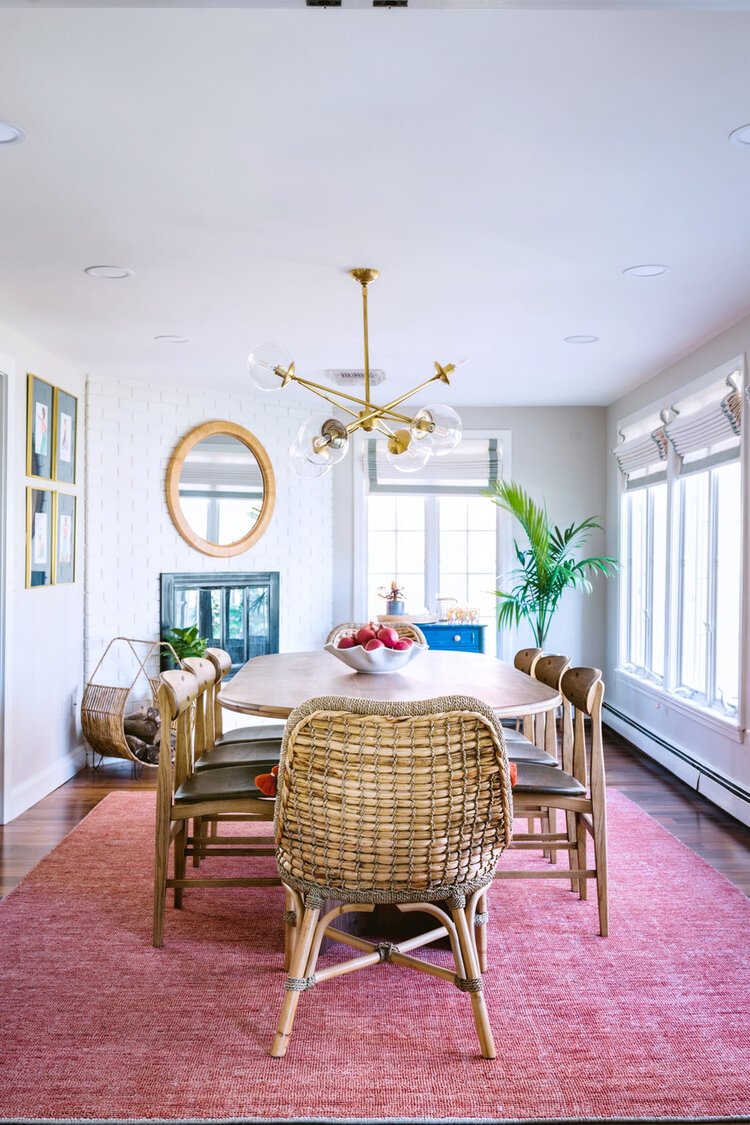
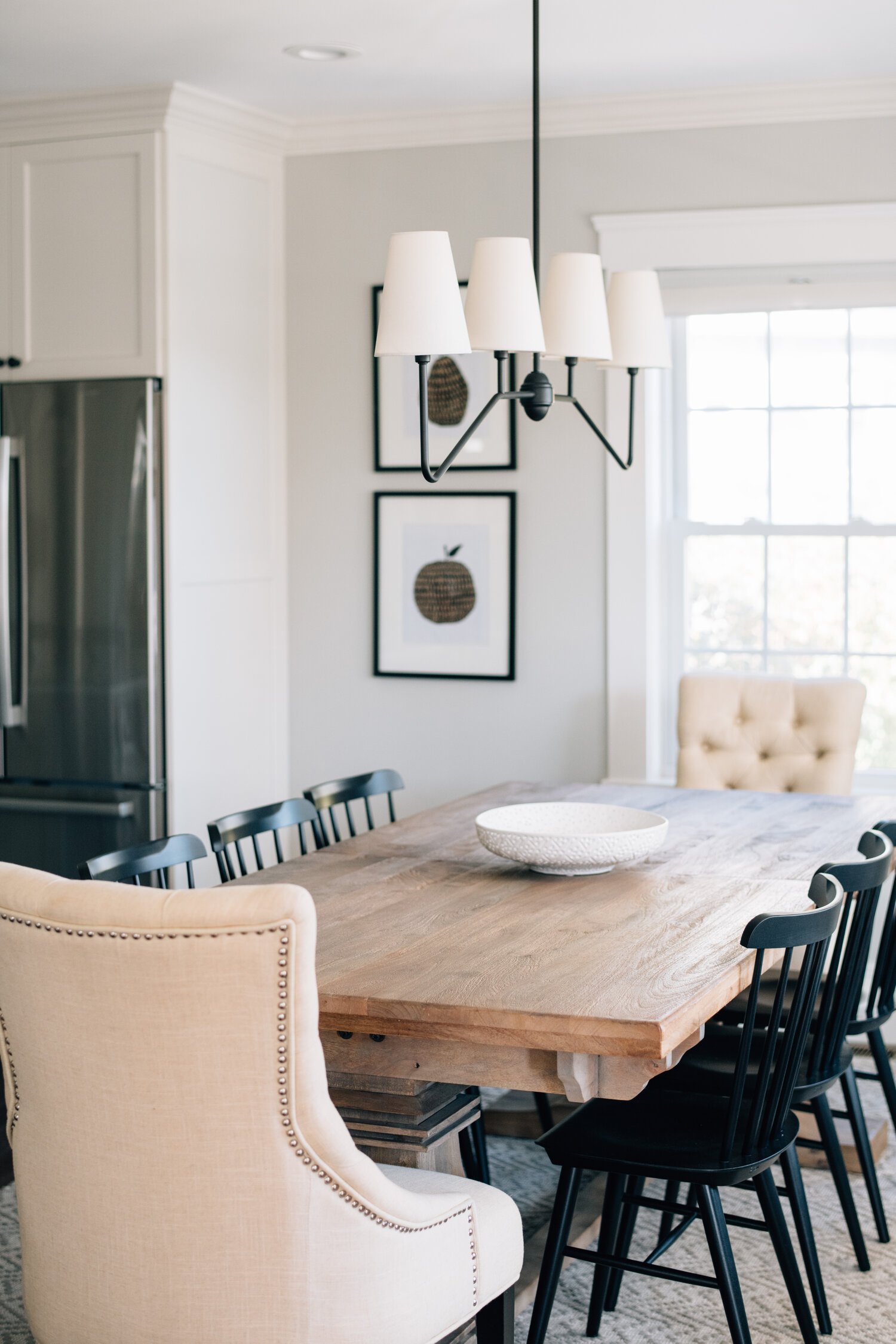
Here, we kept the color story very similar - grayscale with some muted blues. Both spaces have oval tables, both spaces mix black and brass metal. But, the dining area has a big moment with the dramatic chandelier and wallpaper, and the living room area has a big moment with the built-in: these statements don’t compete.


similar dining chair / similar oval dining table / banquette / chandelier

Let’s talk about oval tables.

The beauty of an oval or round table is that it allows for a smoother flow of traffic. Some rooms are pass through spaces versus destinations. The informal dining area of this project is flanked by two cased openings and the kitchen island on a third side. There are entrances and exists everywhere. It’s part room/part hallway. The oval dining table eliminates corners and thereby makes a visually easier path and an actual easier path with chairs tucking a bit tighter. Likewise, whenever a sectional or two sofas placed perpendicular (like a sectional) are in the mix, an oval or round table allows for easier navigation.

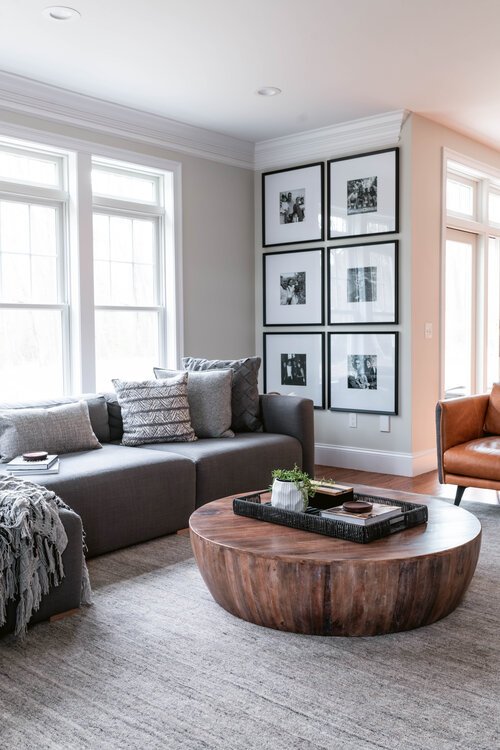
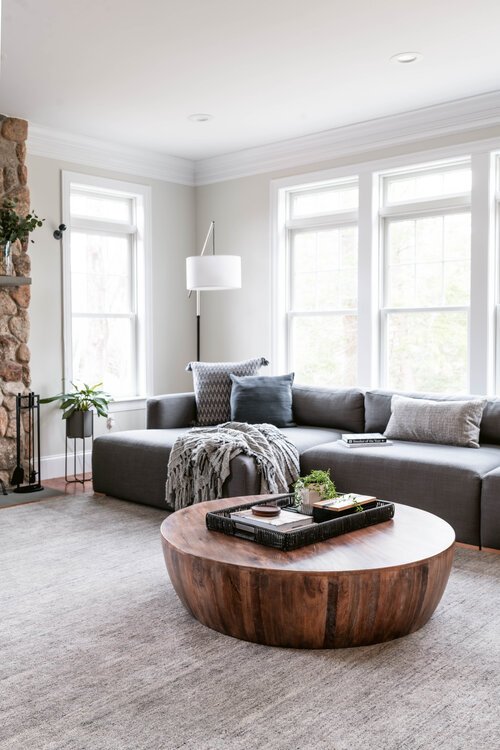
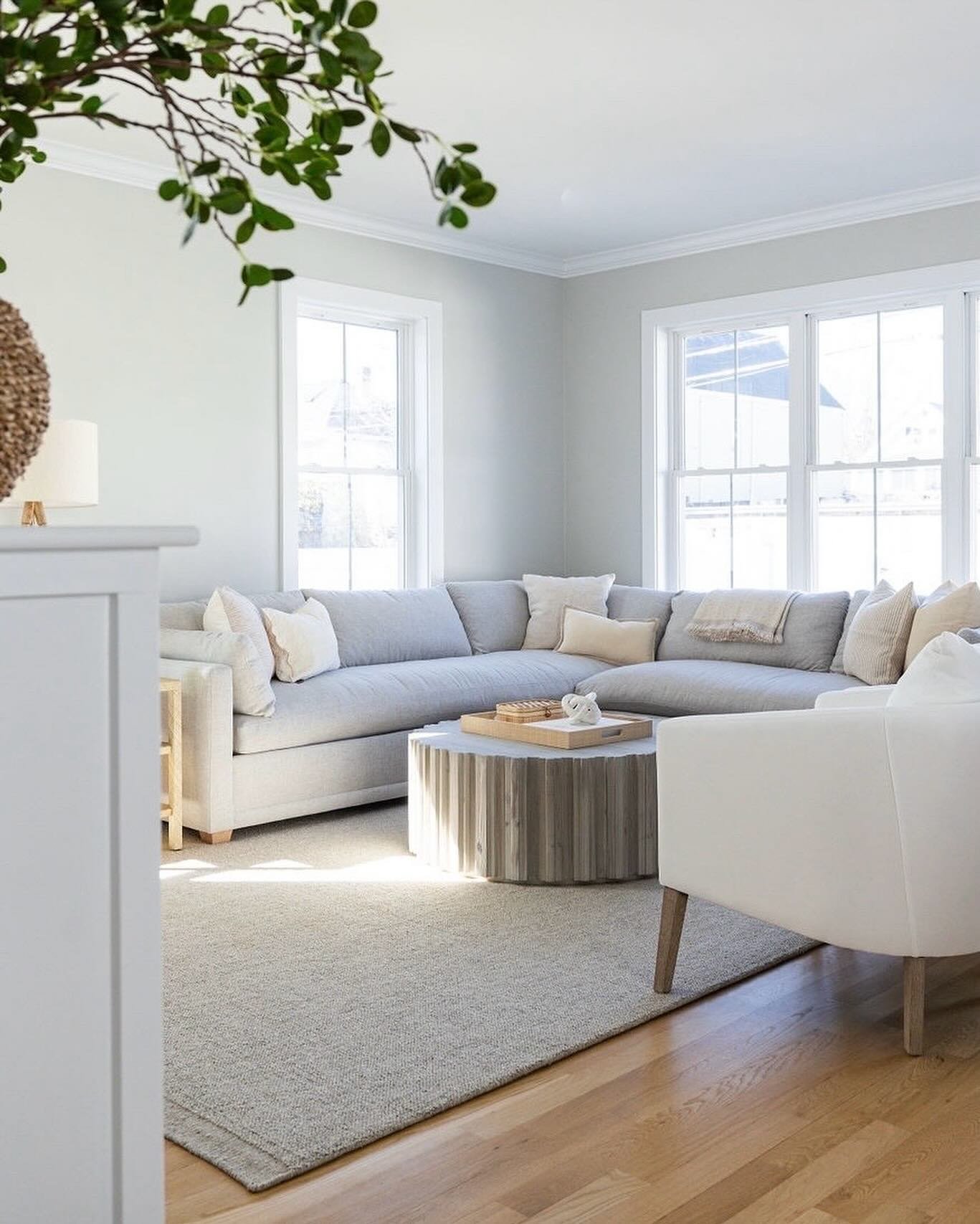
The last function element to address is what to do with a really large living room. An easy litmus test to decide if a living room is in need of more than one function: will the largest retail rug you can find (typically 12’ x 15’) fill the space? A living room should have a big rug that covers as much floor as possible with the front legs of all furniture on top. For many living rooms, this will be a 9’ x 12’ rug. For some smaller living rooms, this will be an 8’ x 10’ rug. For big living rooms, this will be a 10’ x 14’ rug. And for huge living rooms, this will be a 12’ x 15’ rug.

If you have a big or huge living room and there is still a bowling alley behind the sofa when the legs are pulled onto the rug…it’s time to reassess the layout. You’ll probably want to size down the rug, size up the bowling alley, and make that bowling alley something intentional and useful. Maybe the area behind the sofa becomes a puzzle table or separate seating area. Maybe you add bookcases and poufs. Maybe a small desk and work station. So many choices.

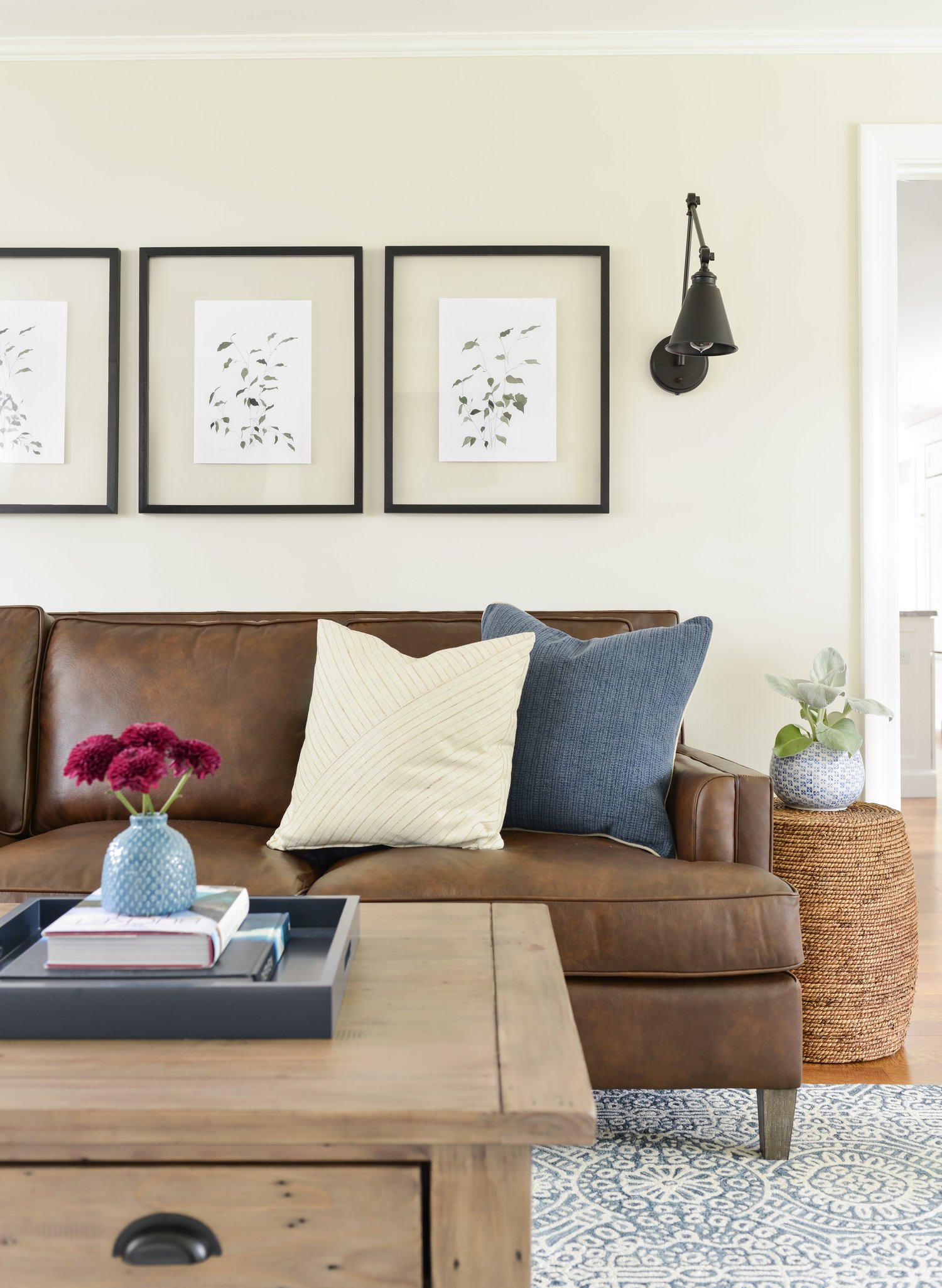
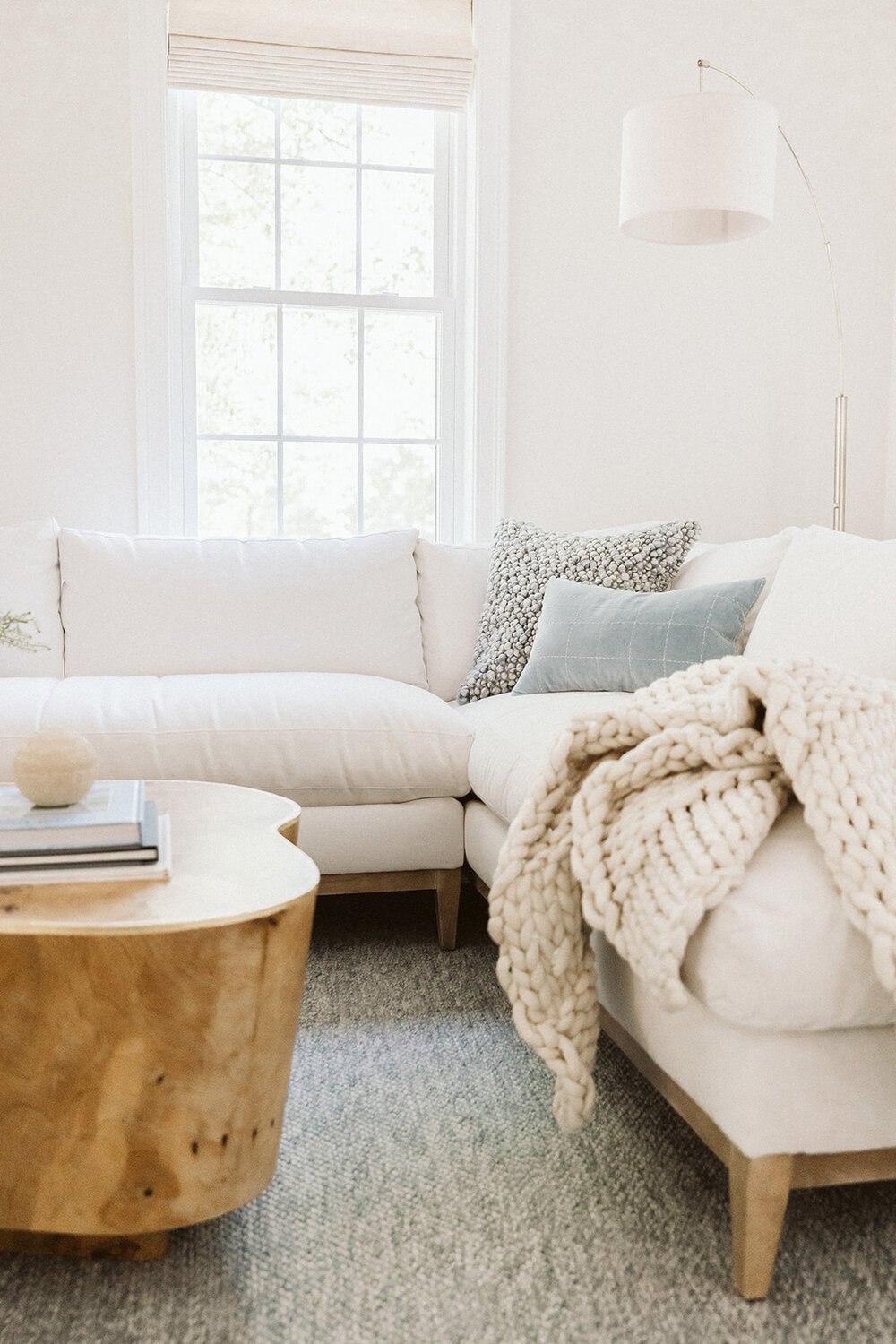
rug / favorite rug pad / similar coffee table / decorative wood balls / brass display box

When we initially drew this living room and played around with the layout, we found ourselves wavering between a 10’ x 14’ rug and a 12’ x 15’ rug. It was a signal to us that the room was too big for a one-purpose layout. When one person will be sitting over 15’+ from another person, or when television viewing is 20’+ away from the TV itself, call Houston. There’s a problem.

In this project, the solve was to create a wall-to-wall built-in media center. This had the effect of shortening the room by 3+ feet. The built-in itself was 2 feet deep and it needed a good foot of clearance in front of it. With this addition, we chose a smaller rug and pulled the furniture closer together. It’s all about striking a balance between spacious and cozy.

similar cabinet pull / sconce / footed white bowl / similar glass globe

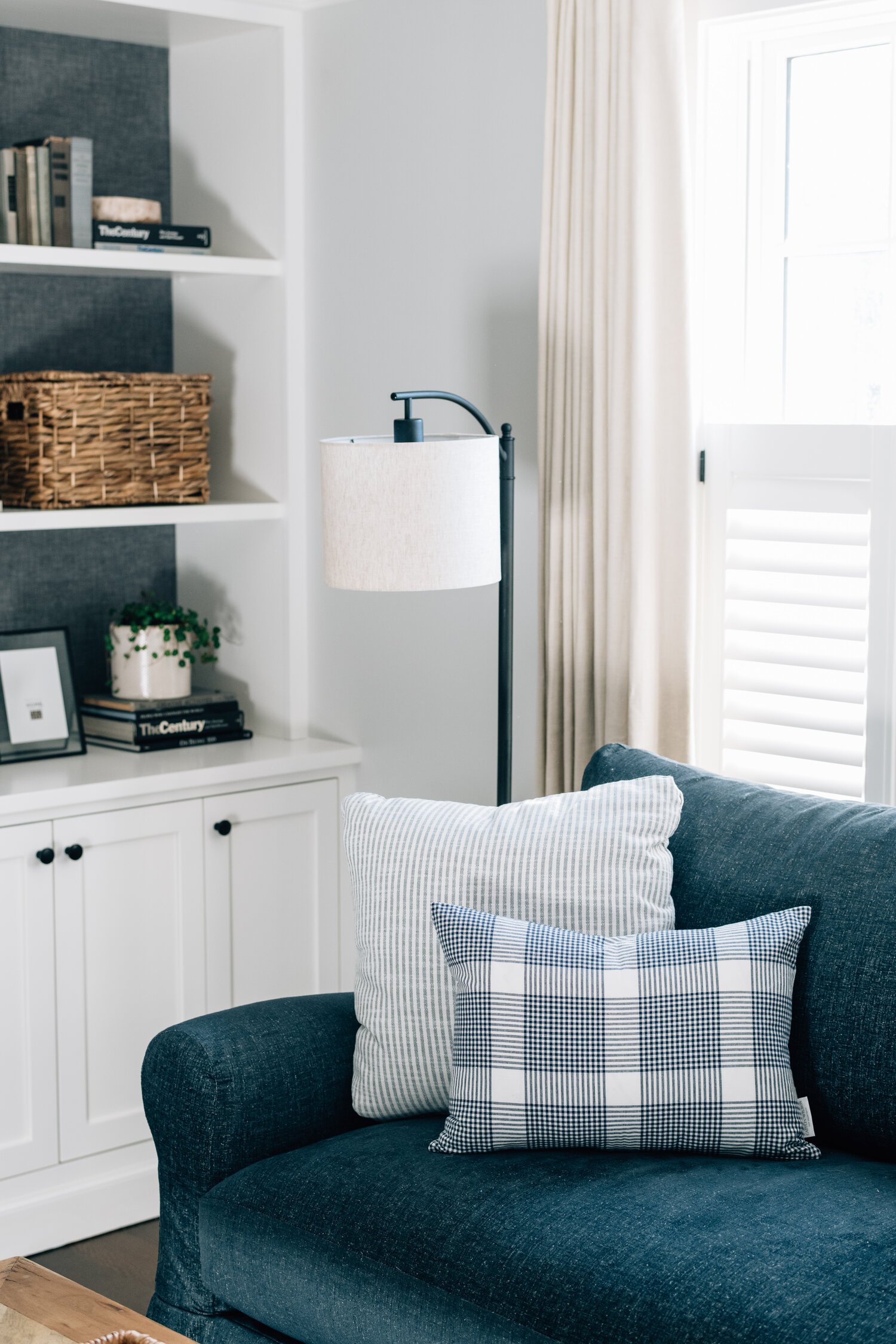
The aesthetic details of the built-in are what makes it feel intentional. This is true of any built-in and is especially important when it is asymmetrical. We united the different sides with a consistent backdrop - the vertical tongue and groove. And the crown molding that bends around the unique corners and connects to the rest of the room is key. There are drawers on both sides with matching hardware (matching in style and size). And, of course, it’s painted in one unifying color that contrasts the wall color.

Thanks for following along! Please feel free to ask questions in the comment section below (or shoot us a DM on Instagram). If you missed the prior post about the piano room and foyer of this project you can find it here. And head to our portfolio for many more photos.

Cheers, Leah

*this post contains affiliate links*

Rolling Project Reveal - Entryway and Piano Room

Today we are going back in time and revealing details behind our Rolling Project. This is a two part reveal. Part one (today) will detail the entryway and piano room. We have a variety of inspiration for you: how to think about your entryway as part function and part pretty, using stripes in a modern way and the impact of layout.

We began this project in fall 2020 (feels like a lifetime ago) and finished in fall 2021 thanks to a stubbornly delayed dining table that was worth the wait. We designed the living room, piano room, foyer and informal dining area (eat-in part of the eat-in kitchen). The goal of the project was to take a recently purchased new build from builder grade to elevated, unique and welcoming. The palette is neutral with some great high contrast moments.

Entryway

This home has a two part entryway - one that is more driven by function and one that is more driven by beauty. This dichotomy exists in every room. There is usually a woven balance within a single space. But the footprint of this foyer happens to naturally divide the function from the pretty.

When you first walk in the front door/formal entrance of the home, conveniently hidden behind the front door as it opens, is the function. Without a closet, and no place to build one, it was important to create a spot for guest coats. Any guest facing space needs to lead with pretty even if it’s grounded in function. The coat rack is part cool and part vintage, and adds a great touch of character. Some interesting, statement hooks (like these) could have been another option if the wall had been just a touch bigger. We also added a landing space to put on shoes or rest a hand bag. And, finally, a mirror to check your teeth before you head out or flatten your hat head when you come in.


coat rack / similar knit cube / similar mirror / similar leather backpack / black sneakers

It’s a tight spot that manages to handle a lot of purpose. We were able to accomplish this by keeping each element skinny and taking advantage of the vertical space.

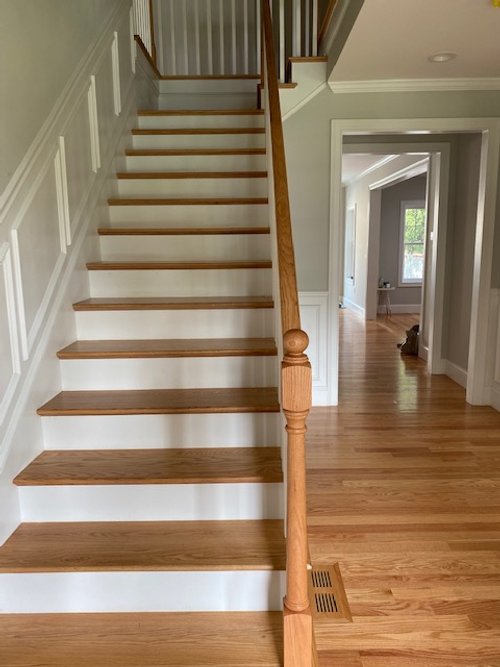
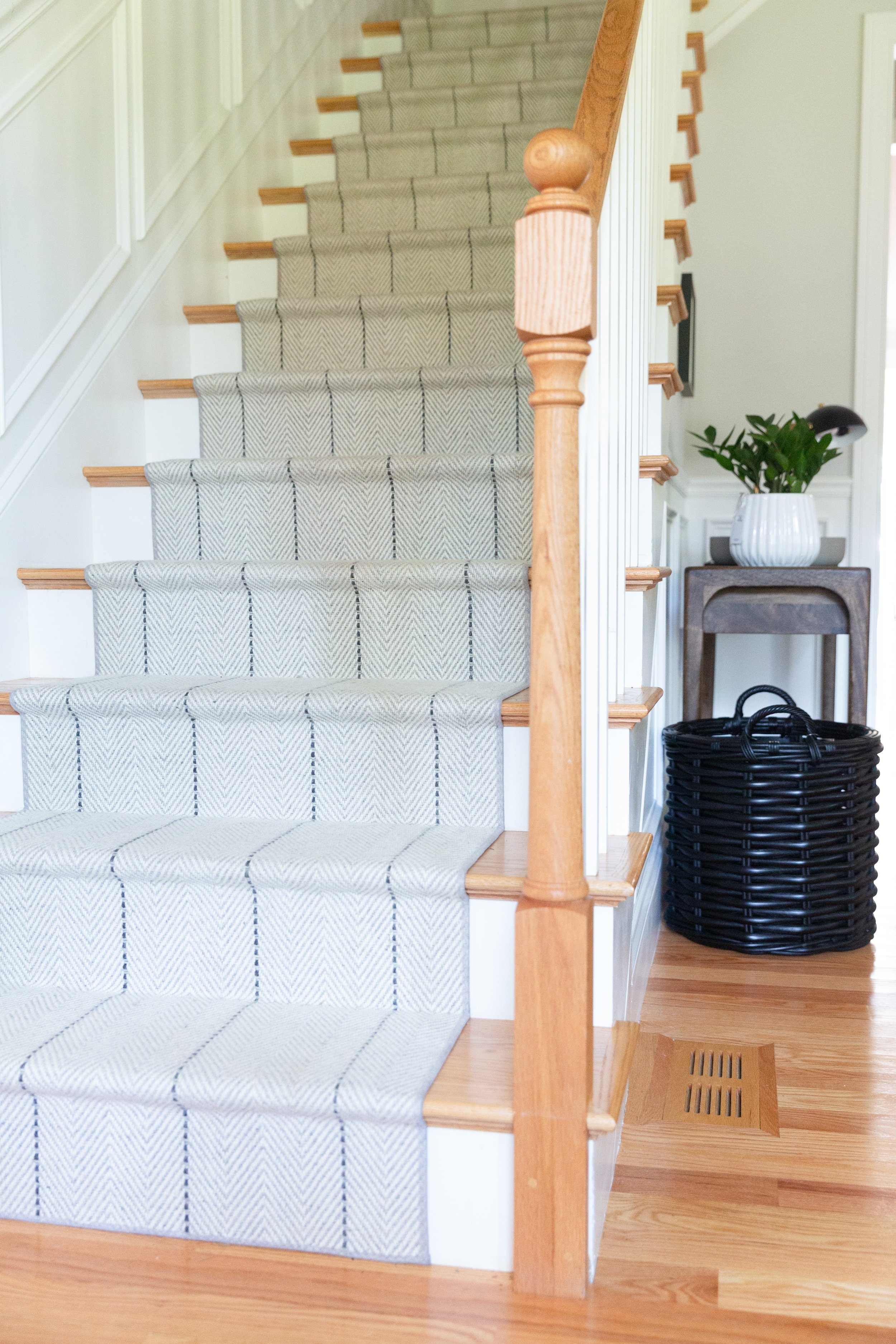
We also made a big visual impact by adding a stair runner. Stair runners are an investment, but also really worth it for families with young children and dogs. They also bring color/texture/personality to a space. And when the first thing you see when you open a door is the stairs, these things matter. The rug style we chose is classic with just a little something. The subtle chevron pattern with the contrasting stripes add the right amount of interest for this project, which has subtle, moody and modern vibes.

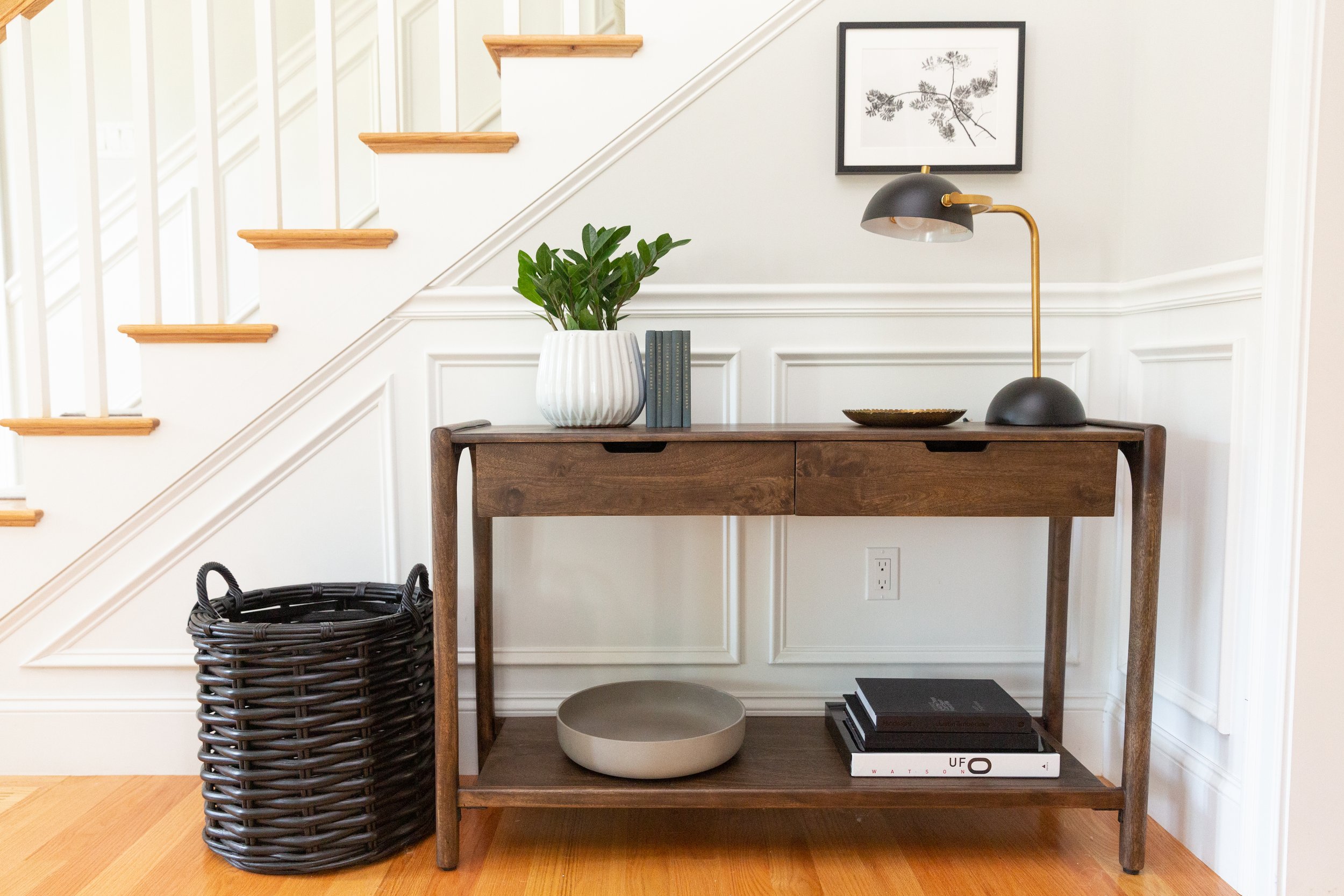
Sitting against the side of the stairs is the pretty part of the entryway. Along with the stairs, the side profile of this space is the opening glance of the home when opening the door. With this, the aesthetic factor took precedent. But, that didn’t mean we threw function to the wayside.


oversized black basket / console table / UFO book / botanical photo

We chose a console table with a lower shelf and two drawers to provide lots of open and hidden storage. We also added functional decor. Oversized, shallow bowls are excellent for corralling keys and mail. And big baskets are excellent for incoming and outgoing packages…or the “quick throw everything in the big basket before the guests come over and throw a pretty blanket on top” move - don’t we all do this?!

Piano Room

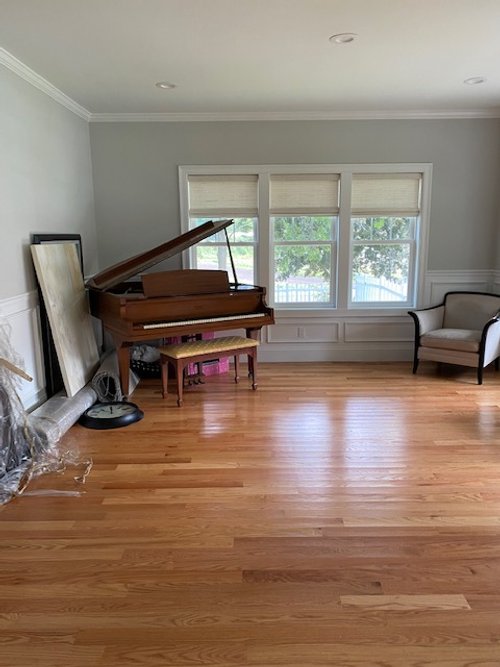
When we started this project there was nothing in the Piano Room other than the piano. We were tasked with creating a transformation using existing furniture (from another room). Designing around existing pieces is a different thing than having creative control over the whole shebang. It’s about finding the perfect pieces that complete the puzzle, rather than creating the puzzle.

Here is a photo from the first day we came onsite.


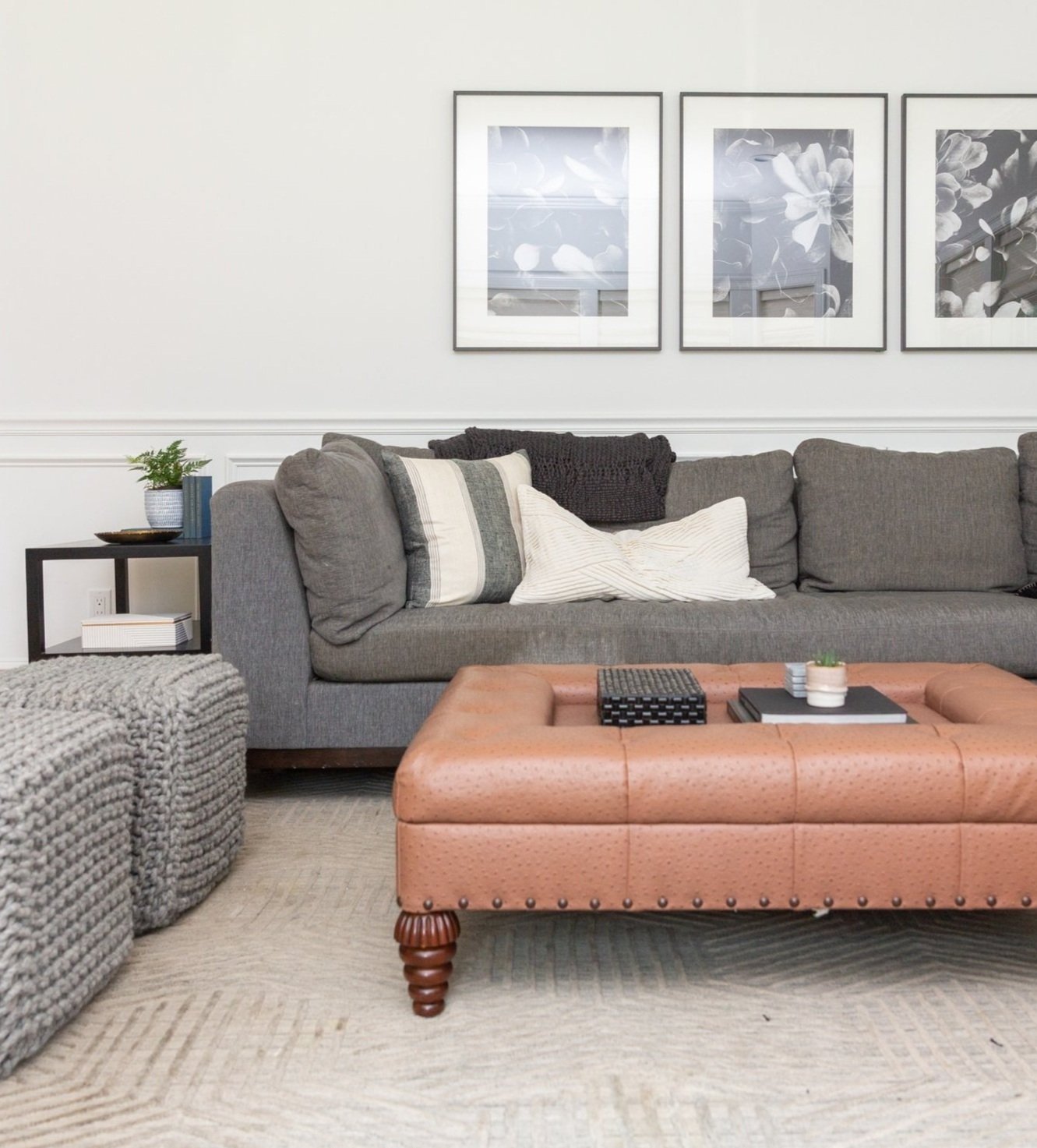
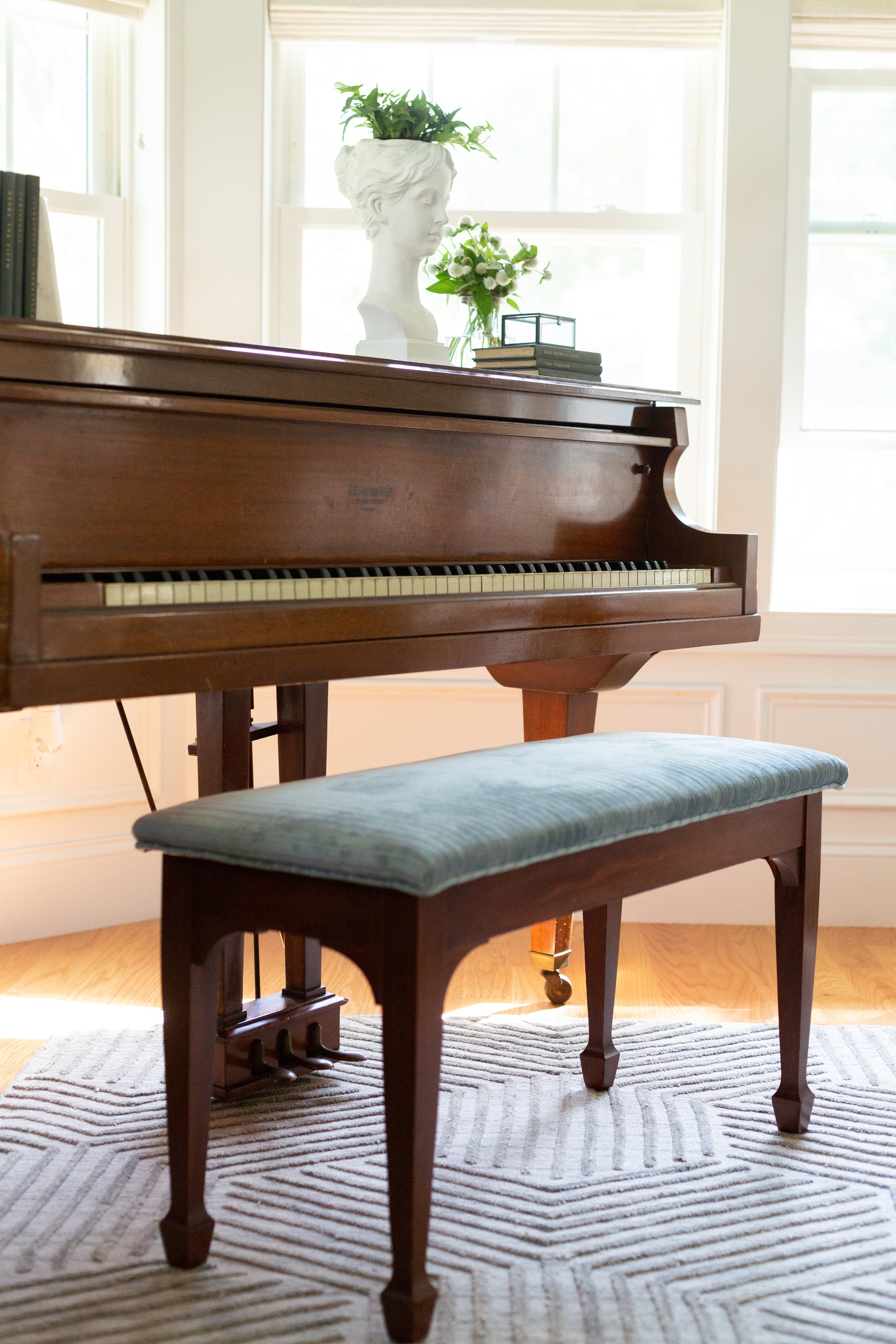
We started by completely reimagining the layout as we considered fitting the existing piano, sectional, coffee table and rug. So often layout is the main thing holding a room back. Here, there is extra, bumped out space thanks to a bay window. By shifting the piano into this bay window nook we were left with a squared off room for squared off furniture. Everything fit cleanly and the room felt bigger. The lesson here is not to fight with the natural angles and shapes of a space.


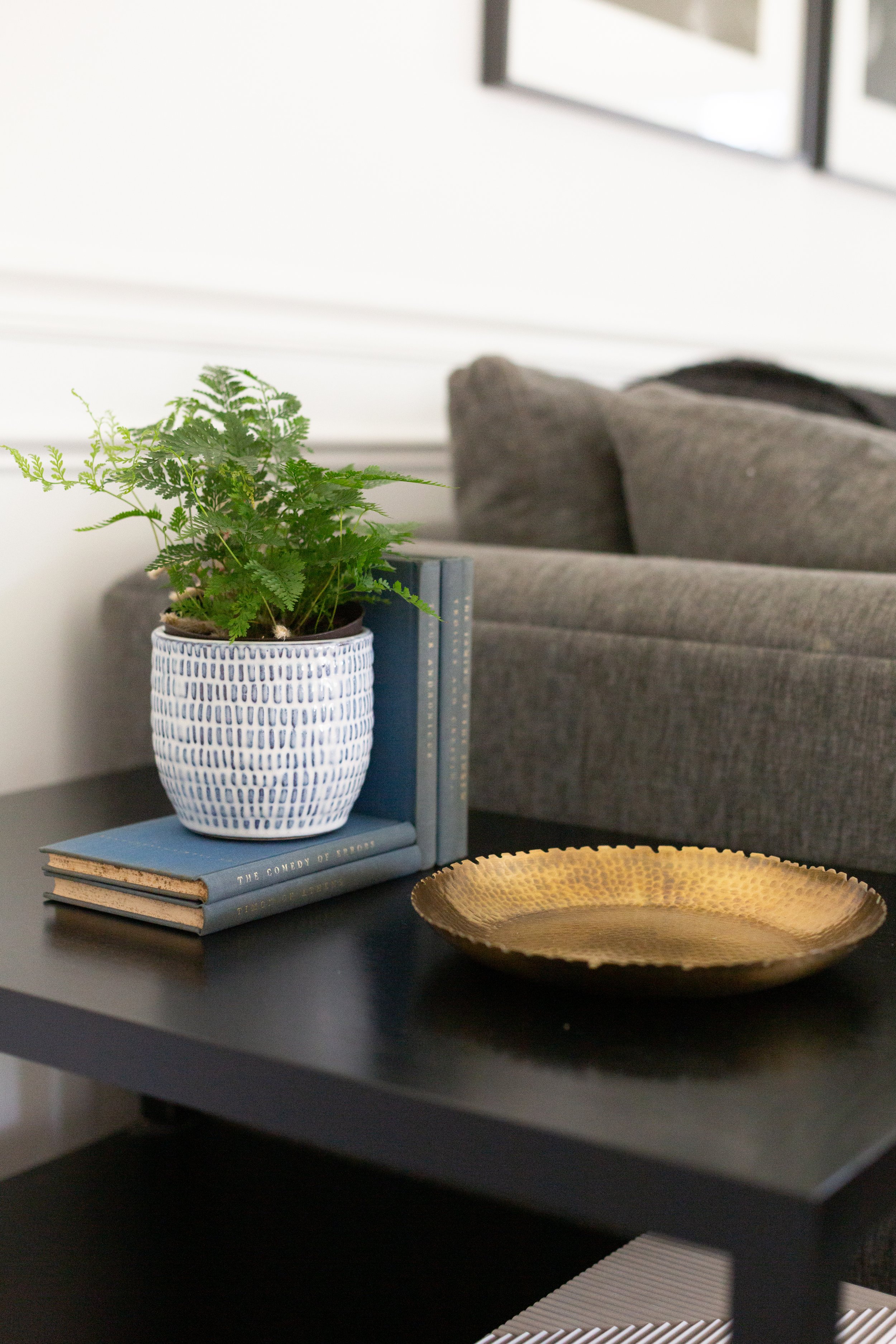
With all the large furnishings in place, we layered in ancillary furniture that increased function and added personality. A side table next to the sofa arm, a swivel chair/side table/floor lamp scene, lots of decor and art, and a pair of poufs. Poufs are work horses. They are seats, foot rests, plant stands, side tables. They are whatever you need them to be short of a good spot to nap.


black and white flower print / pleated pillow / our favorite off the shelf black frame

For the swivel chair, we chose a plush fabric with oversized ribbing. The texture was important because the color palette of this room is neutral and muted. We love mixing up shapes and/or sizes and/or colors when it comes to side tables within a room. The side table by the sofa is black, rectangular and tiered. The side table by the swivel is round, pedestal and naturally stained wood.

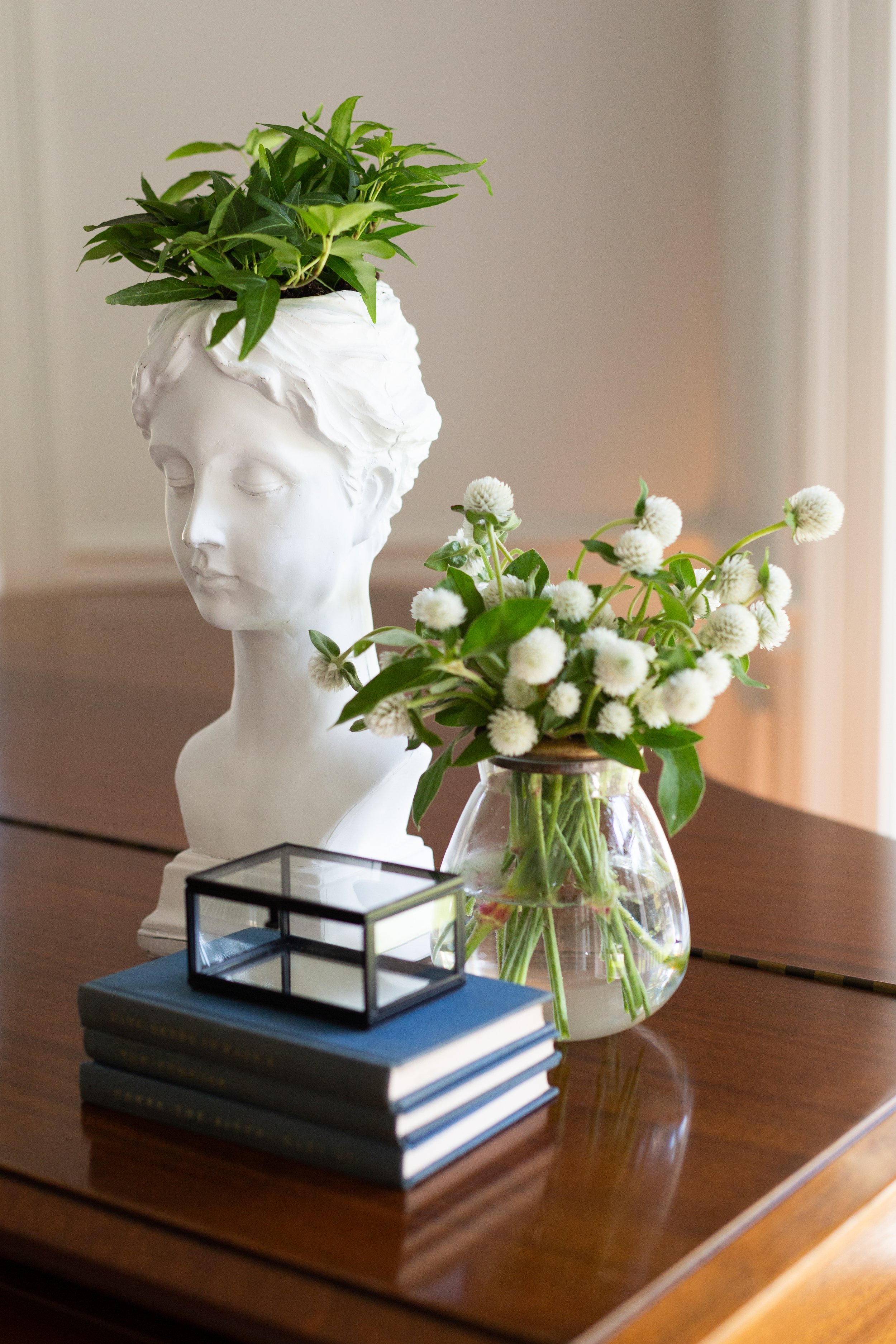
One more fun thing to note about the big picture design for this space: stripes. We introduced and repeated stripes everywhere. The rug is the most obvious stripe pattern. We also added the “striped” swivel and reupholstered the piano bench in a channeled, smoky blue velvet. And if you scroll up, you’ll see lots of stripes in the pillows and even the striped lines of the books we stacked on the piano. And yet, even with all the stripes, ribbing, channeling, pleating and everything in between, it’s not overdone because it’s almost entirely tonal. The stripe concept is more of a texture than a pattern.

floor lamp / side table / Bob Dylan print / similar bust planter / mini glass box

And now the details of the room. We always encourage attention to detail because decor sets a room a part. Some easy things to note are mixing shapes (straight lines with curves), repeating colors but playing with the shade (i.e. dark gray and light gray), and adding as many plants and greenery as possible (says the two plant ladies).

Part 2 of this reveal is coming!

-Leah

*This post contains affiliate links*

New Year, New Design Style?

Here we are again, at the beginning of another year - can you believe it is already 2022?! This past year went by so quickly!

As the new year begins, I’m sure you’ve heard people talk about new goals and aspirations. Just like creating new goals for the year, you may find yourself wanting to tackle new design projects around the house. So today, we’re going to tackle the topic of finding YOUR personal interior design style. Because before you can dive into those new projects, you need some clear direction. Knowing your style is the best place to start.

To start, we recommend using Pinterest. It’s a great tool. There’s a surplus of beautiful images and you’ll be able to hone in on your favorites (and thereby your style) as you scroll. Make a new folder with the title of the room you’re working on or the specific area (stairway landing, first floor hall, playroom gallery wall, etc.) or item (dining table, foyer console table, etc.). Then start pinning. Don’t overanalyze. Just pin what you like. Everything you like.


OUR Pinterest account full of images from our portfolio as well as products and spaces that inspire us. We even created an Art board to help clients (and you!) discover their favorite art genre.


When your folder has at least 20 photos, it’s time to pare down. Go through the images again, this time with a critical eye. For example, if it’s a console table, consider all the aspects - function (enough hidden storage?), size, color/stain, hardware finish, design details, etc. You’re not picking the console table quite yet, you’re just eliminating pieces that have an element you don’t love.

Finally, do some analysis. Look at the photos that remain as a collection. Are all the tables white washed? Do they all have a lower shelf? Are the rooms light or dark? Colorful or neutral? What is the most common color you see? What is the hardware finish? Are all the coffee tables round? You get the idea. There will be repetition of certain elements. You may be all over the road on the color of the sofa, but 50% of the rugs are jute. There will be some patterns, find them.

Once you find the patterns, the elements that you have a clear vision will anchor your room. Whether it’s wall color or a piece of furniture. Start with all your must haves. And then, piece by piece, layer each item in. When you have a truly buttoned up plan, it’s finally time to start executing.

This is all fine and good, you say, but what words do you put in that little Pinterest search bar to find the right images? “Living room” feels way too generalized. And it probably is. So, we’re here to help. We are going to breakdown some categories of interior styles. It’ll get you started on figuring out your style and also give you some buzzwords to search.


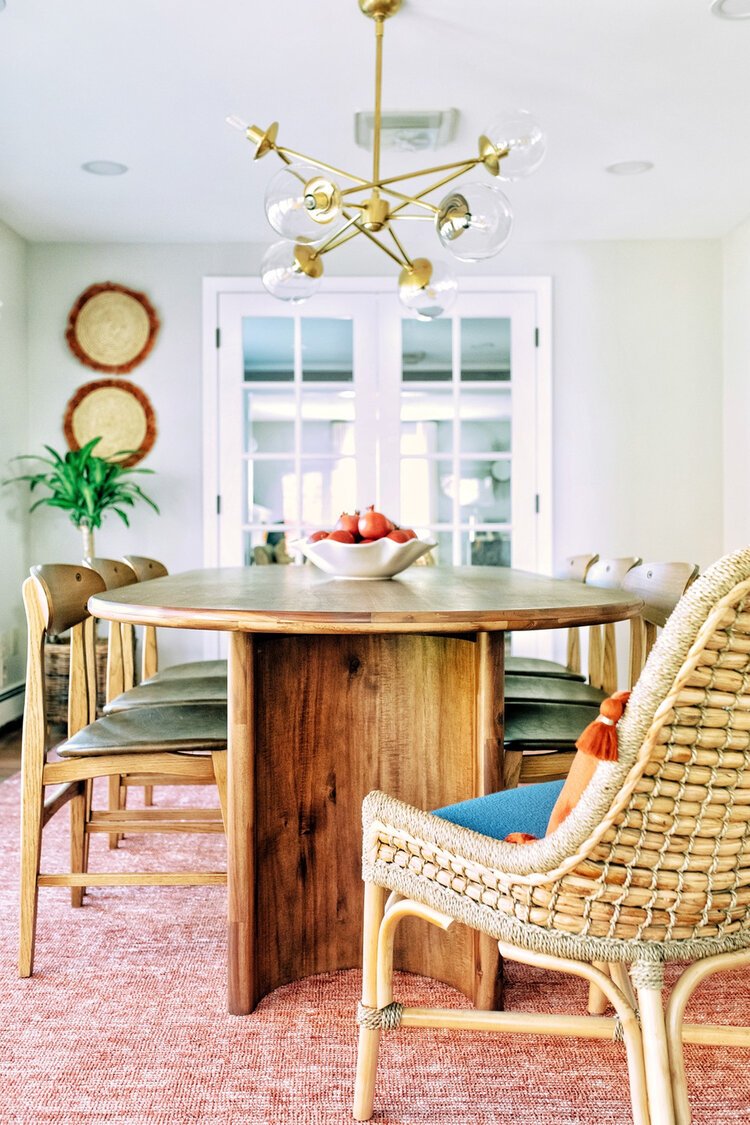
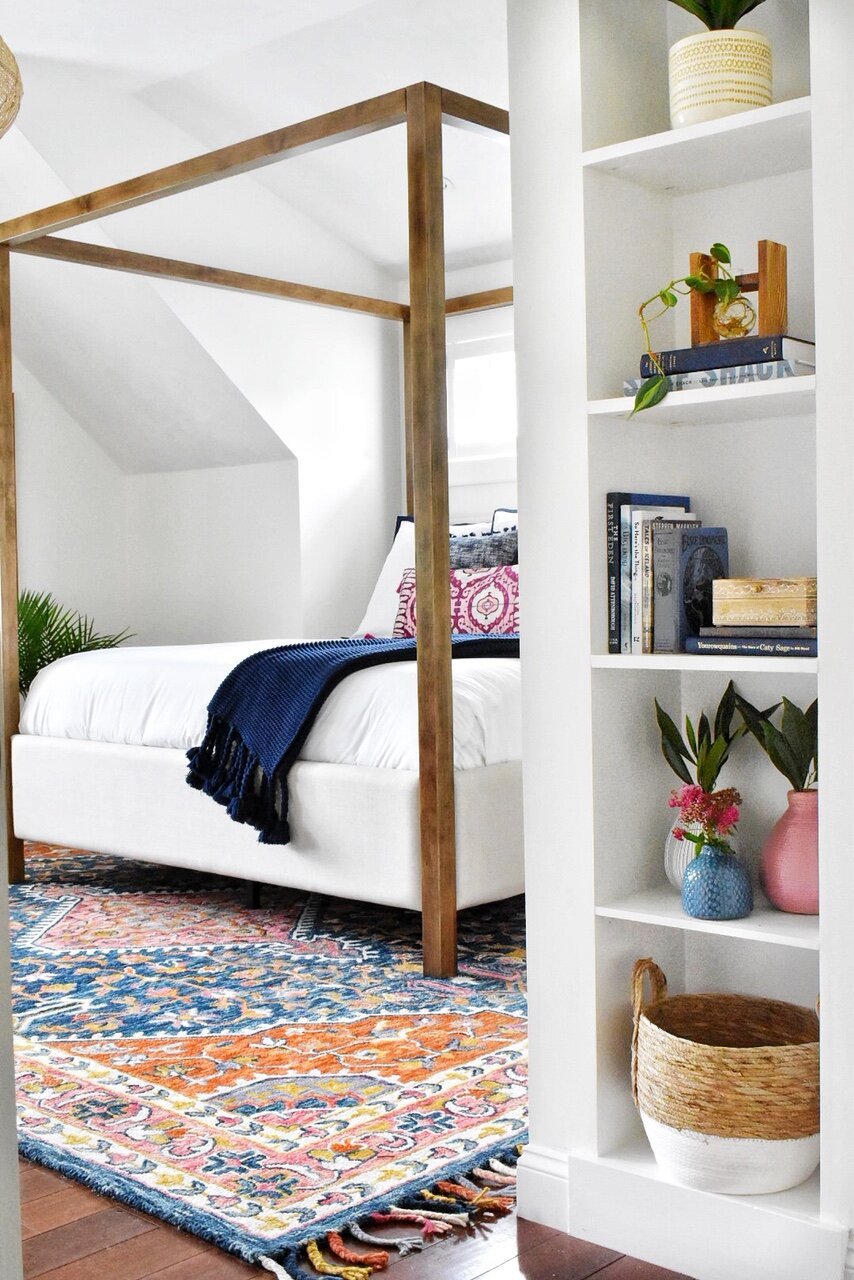
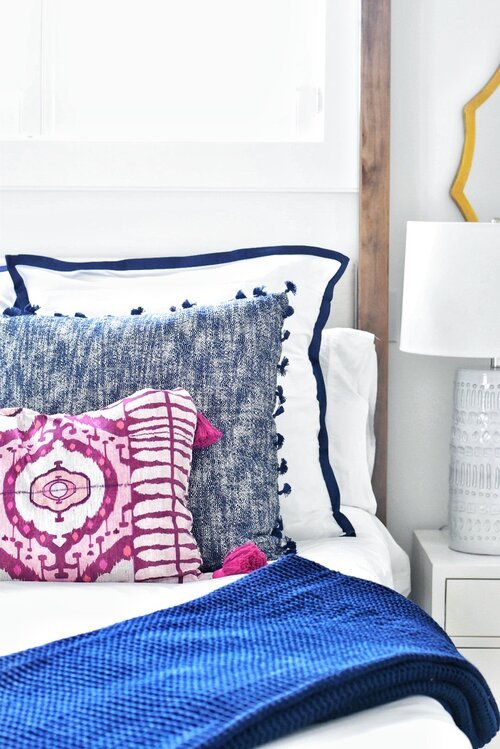
canopy bed / bedroom rug / similar pink ikat pillow / red dining room rug / wood dining chairs / dining table

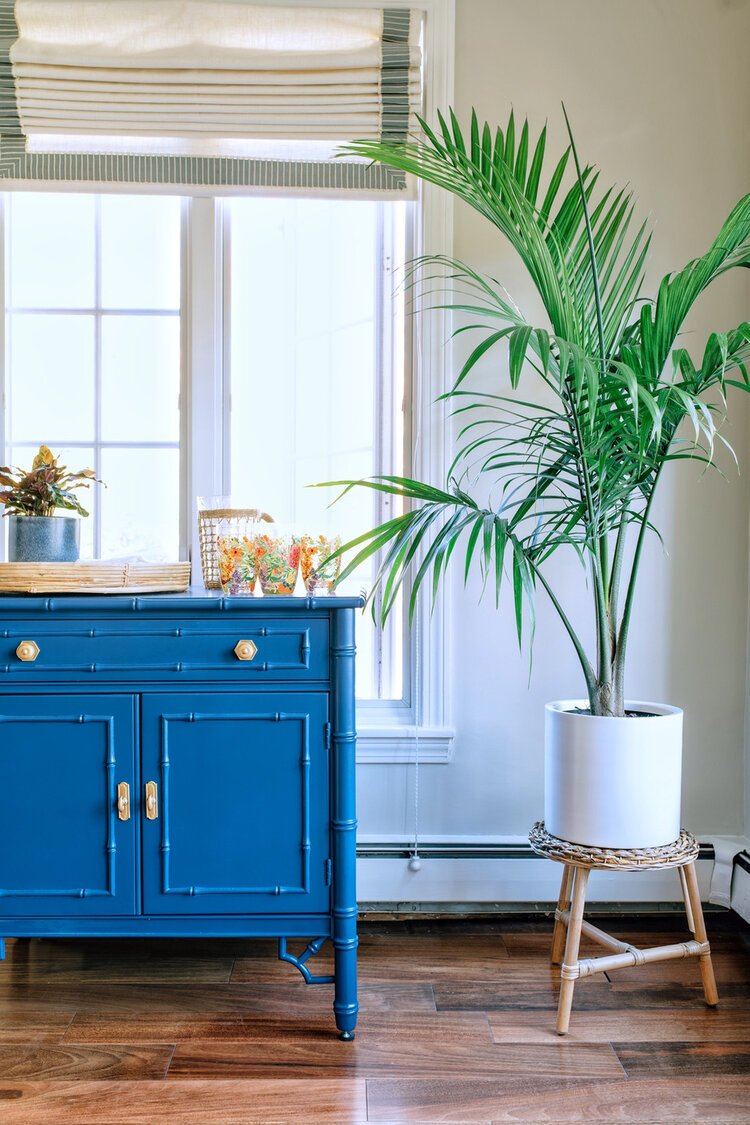
Bohemian, or Boho, style is defined by varying, organic textures and vibrant color. There can be lighter, neutral elements, however, it’s more often a rainbow of fun. It is also sometimes referred to as Global style when it mixes elements that are culturally inspired, like an ikat pattern or Moroccan lantern. There are few “rules” of Bohemenian spaces - it’s more about mixing and layering all the things without worrying about matching and coordinating.


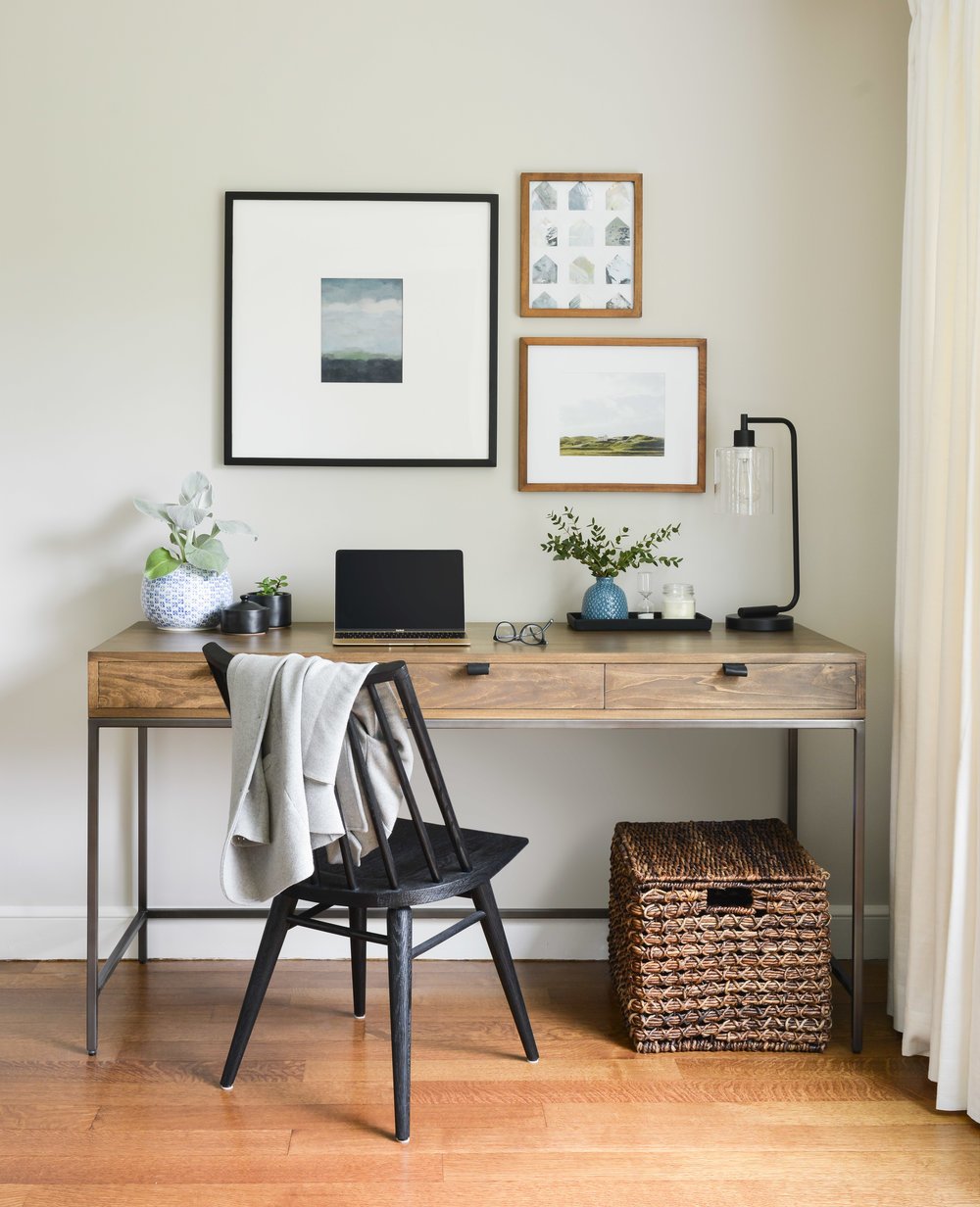
black frame / desk chair / desk /

Transitional style is probably the most popular style of the moment. And, it’s more often than not used as the foundation for our projects even when we sprinkle in other styles. By definition, it is an updated traditional style - classic ideas made modern. It takes all the shapes and design ideas that have existed forever and makes them a bit more casual and comfortable. This lends to straighter lines and larger scales. While colors can vary, it’s commonly based in a neutral palette (whites, grays, beiges, creams and everything in between) with darker accents in organic colors. The idea of “organic color” are those colors commonly found in nature - forest green, navy blue, rust orange. On the other hand, hot pink won’t read Transitional.


Modern style airs on the side of minimalism while implementing clean lines and a monochromatic color palette. Monochromatic means that you are sticking to a color scheme that consists of mainly tints or shades of neutral colors. It is important that modern spaces remain uncluttered with simple, yet functional pieces. Furniture without much (or any) adornment are key. To warm up a modern space, just add natural wood.


Rustic & Industrial

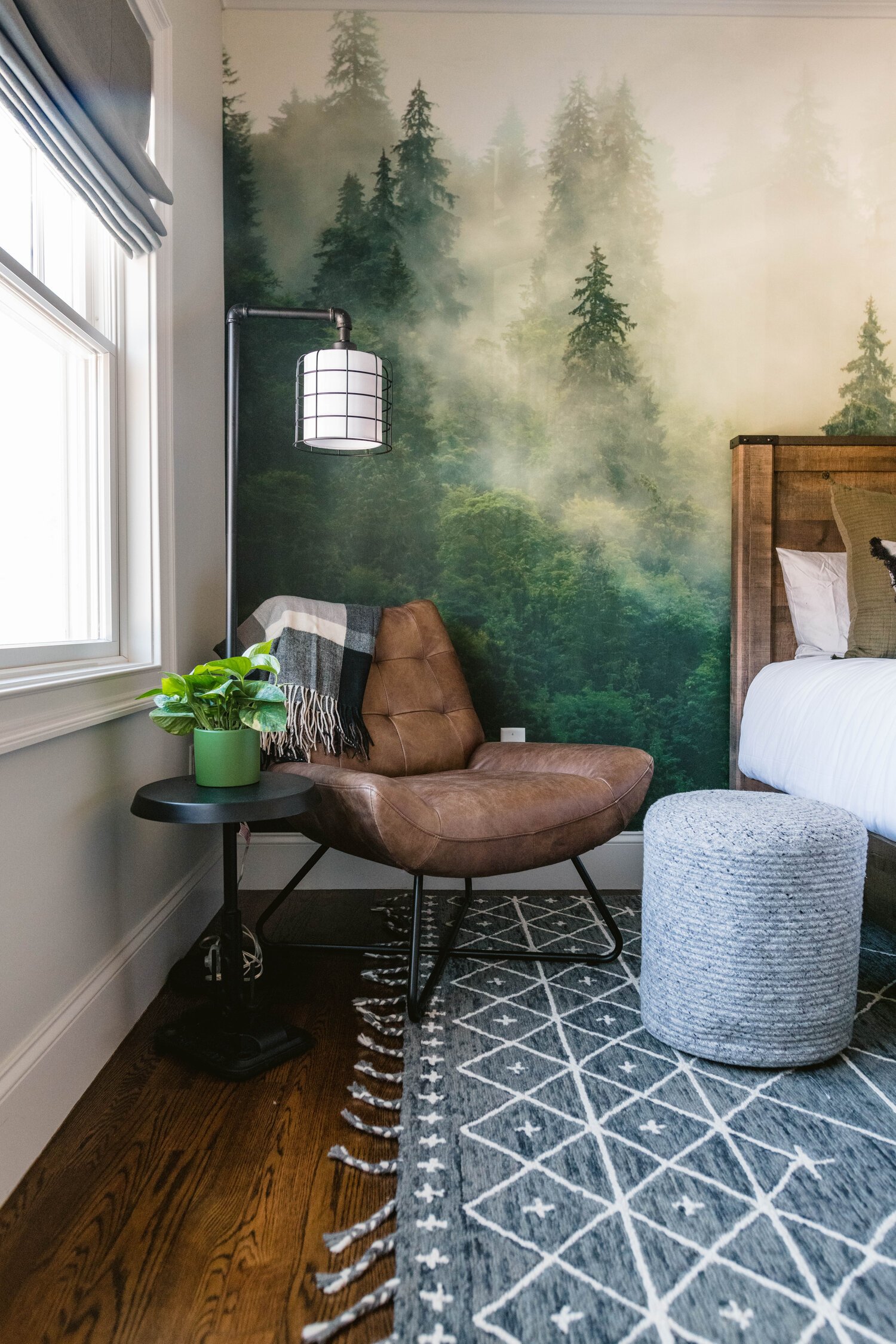
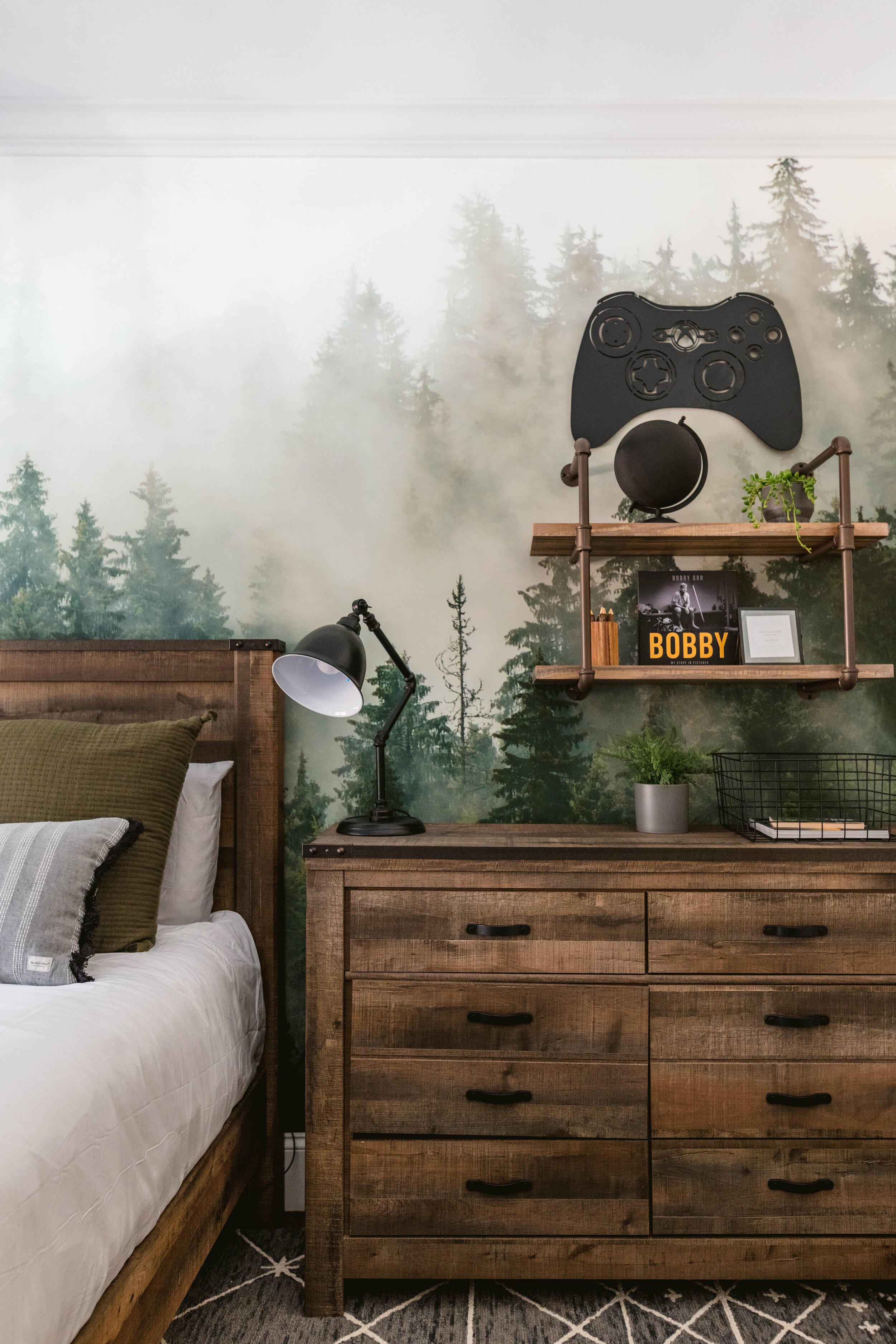
Sevinor Boy's Bedroom

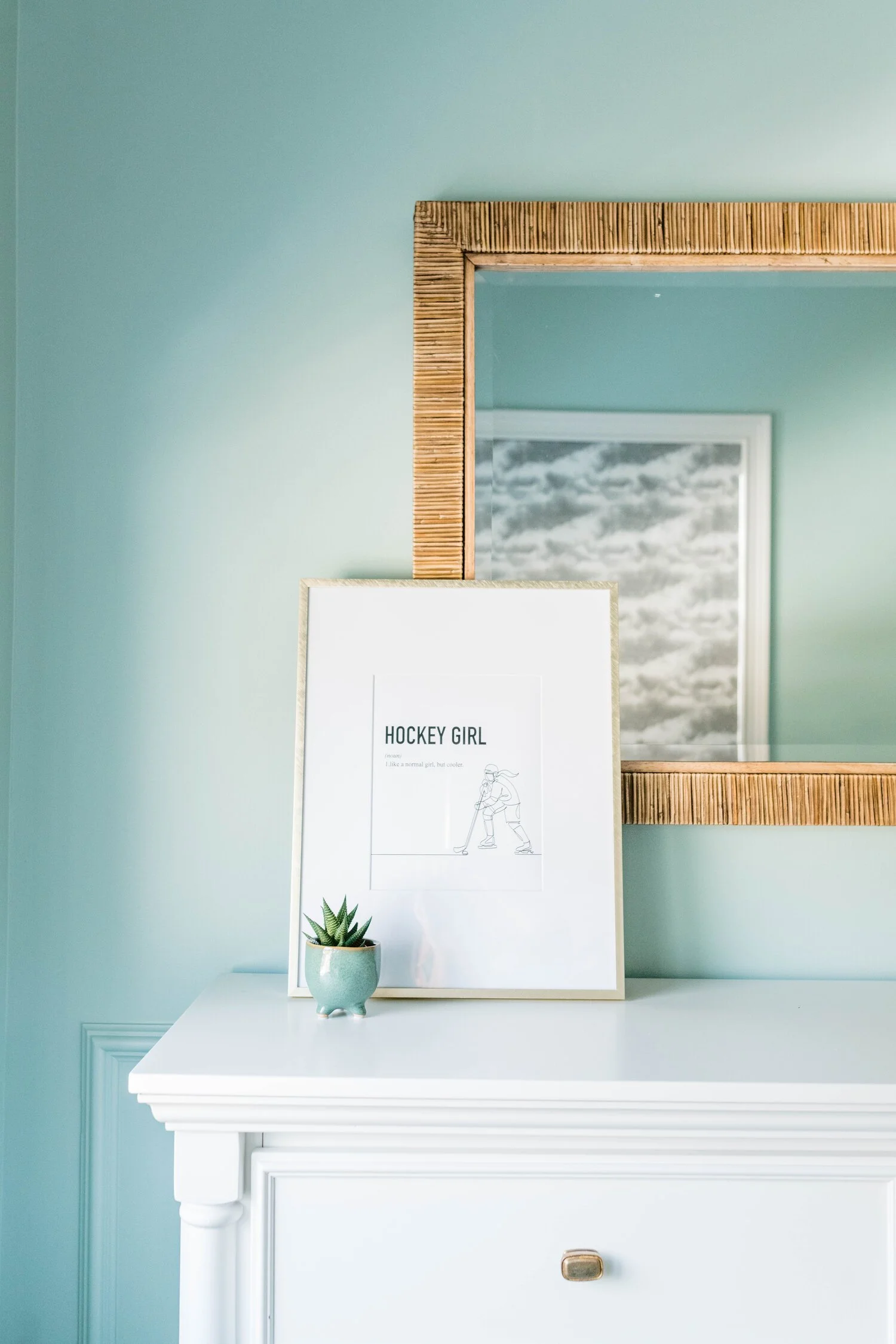
rug / leather chair / hockey stick hook rack

Industrial style takes inspiration and pieces from old factories and industrial spaces. For example, exposed rafters, thick iron piping, brick and concrete. Think of cogs, gears, cranks and elements that almost have a machine like quality. Nothing that looks visually breakable or delicate. Rustic style implements natural and raw materials. The wood is not overly smoothed, the fabrics are not tightly woven. This is the mountain cabin vibe. Maybe there are even some antlers involved.


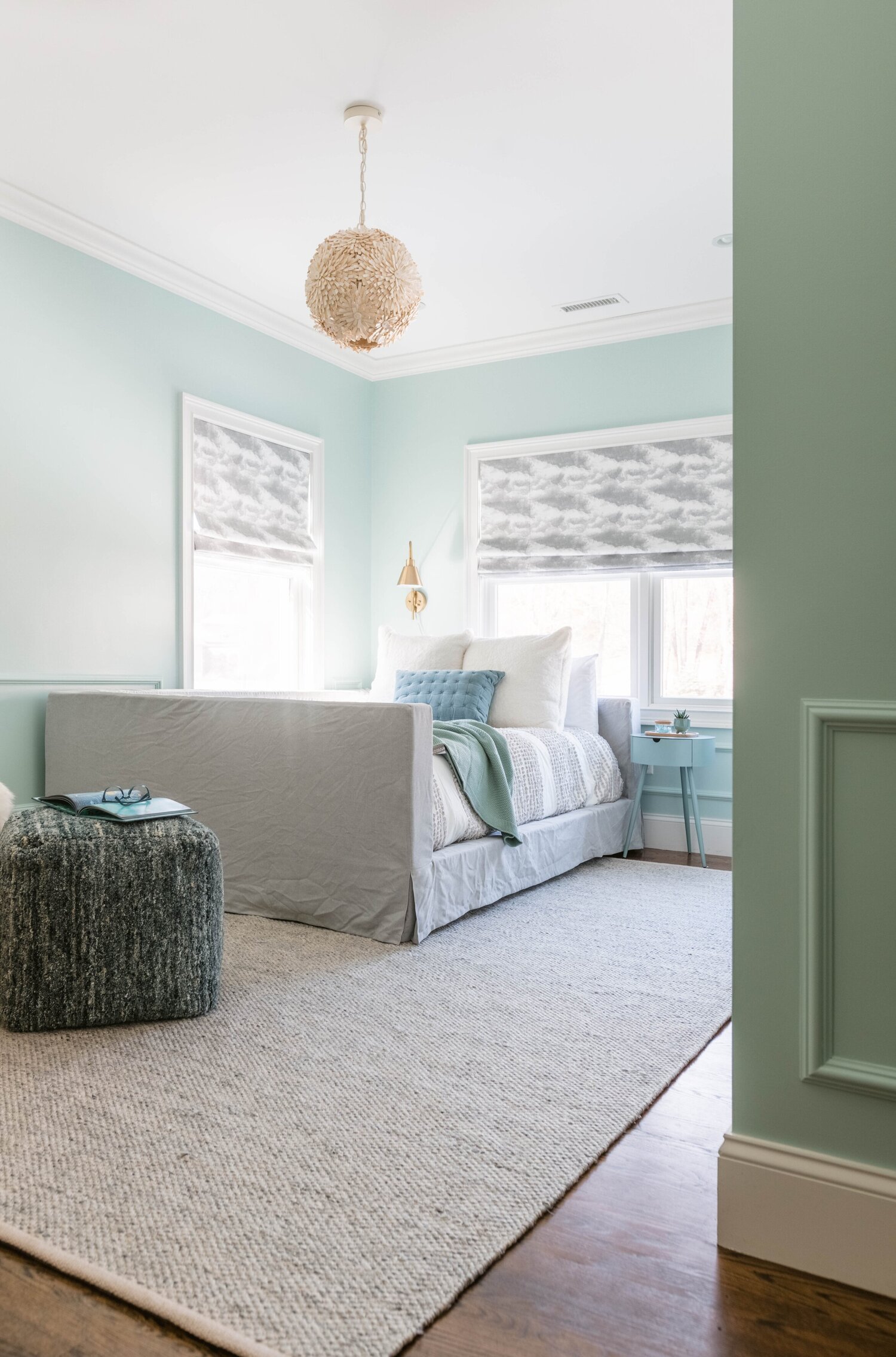
gray bedroom rug / twin bed / wave wallpaper / brass wall mount bar

Coastal style is beachy and nautical and all things ocean. When it’s applied to non-beach front homes, it’s the non-kitschy version of all these ideas. Rather than shell framed mirrors and nautical flag art, think colors of the beach (beige, tan, blue, white) and natural materials associated with the water. Rope like material - jute, sisal - and not actual ropes. Capiz light fixtures and not conch shell decor. Wave and nautically derived patterns are great too.


Glam Coastal

Sevinor Girls Bedroom

pink indoor/outdoor office rug / white bedroom etagere / aqua nightstand / brass plug-in sconce

This is a mash up style of sorts. We’re sharing it because we get a lot of requests about these type spaces and it’s a bit different than a standard coastal vibe. There are feminine, glam vibes. You can immediately see how these spaces differ from the coastal spaces above - there is more brass, gold, pink and turquoise. Those are the keys and, good news, that’s all there is to leaning into this version of coastal.


Mid-Century Modern

Pearl Street Living Room

marble top coffee table / blue bookshelf / small walnut side table

Mid-Century Modern style is a throwback to furnishings popular in the mid 20th century (1940s-1960s). The lines are straight, but angled. Whereas modern furniture is all about the 90 degree lines, midcentury is not. The color palette is also saturated and blocked. The patterns are graphic and bold. There is nothing delicate feeling about this style. And, yet, the furniture is not quite as chunky and large as modern pieces.


nesting coffee table / sheep ottoman / knit ivory star rug / white side table / leather chair

Scandinavian style is minimalistic and simple, while still incorporating texture. The color palette is often pale and neutral as it creates an airy, yet inviting vibe. This style originates from a design movement in Norway, Denmark, Finland and Sweden. Since these countries generally run colder, creating a cozy space is key. As an easy reference point, IKEA is a Scandinavian company that sells Scandinavian style furnishings. The value is in functionality and simplicity without creating stark, cold spaces. Chunky knits, pelts, sherpa and boucle are commonly used textiles to add warmth.


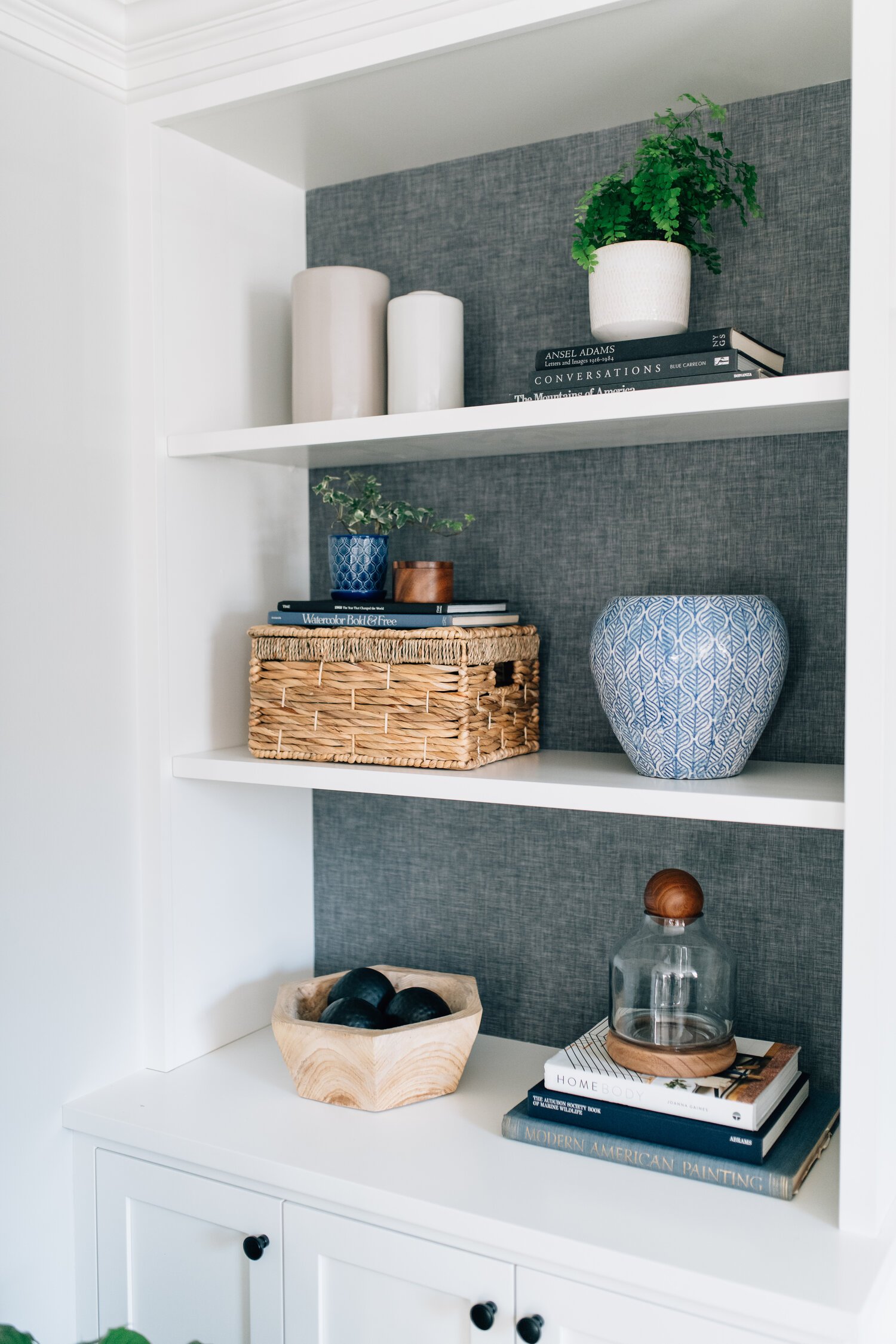
apple and pear art / black Windsor chair / ladder dining chair / blue faux grasscloth / blue gray diamond rug

You kind of know what Modern Farmhouse style is because it was so wildly popular for the past decade. The biggest associations with this style are shiplap, mixing in found pieces (vintage/antiques), natural wood, and turned furniture legs. Nothing says farmhouse like a trestle table! And while it has completed its trend cycle and is officially out, there are elements of Modern Farmhouse that are sticking around - matte black, iron, Windsor chairs, planked accent walls. And mixing antiques will never go out of style.

We hope these breakdowns give you some relevant keywords to search on Pinterest and find your personal interior style. Remember that before you can begin your bedroom refresh or your living room overhaul or whatever your new year project may be, you need to make a plan. And knowing your style is fundamental to making that plan and making it a success.

One last word of advice - remember there is a difference between your style and a style that you appreciate. You can love the way something looks, but it doesn’t mean it belongs in your home.

Until next time!

- Nisha

*This post contains affiliate links*